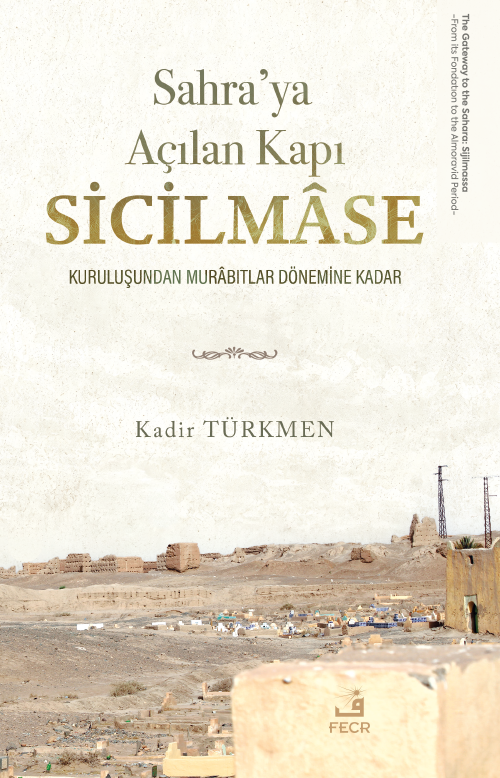
The Gateway to the Sahara: Sijilmassa
-From its Fondation to the Almoravid Period-
This study explores the nearly three-century-long history of Sijilmassa,
one of the cities often overlooked in Islamic historiography, from
its foundation until its conquest by the Almoravids in 445/1053, using
a multidimensional approach. Strategically located at the crossroads of
trans-Saharan trade routes, the city became ne of the Maghrib’s most
significant centers not only economically, but also politically, socially,
and intellectually, owing to its geographic position. The study employs
a comparative methodology that evaluates both written sources and
archaeological findings. While classical Islamic historiography tends to
prioritize central cities, peripheral ones like Sijilmassa have received
relatively little attention. This study seeks to offer a more balanced
perspective on the city’s history by establishing connections between
archaeological data—particularly those obtained through the MAPS
project—and the accounts of classical authors in Islamic history, geography,
travel literature, and biographical works. Furthermore, whereas
most modern studies focus primarily on political history, this research
approaches the city as a multi-layered entity, analyzing it not only as
a political center but also through the lenses of trade, inter-sectarian
interaction, socio-cultural dynamics, and intellectual life. The findings
demonstrate that Sijilmassa flourished through its involvement in the
gold trade, brought together diverse ethnic and sectarian communities,
and fostered a vibrant cultural and scholarly environment. In doing so,
the study contributes a unique urban historical perspective on a city
that has been only marginally addressed in both classical and modern
literature, offering valuable insights into the broader historical narrative.
Keywords: Islamic History; Maghrib Al-Aqsā; Sijilmassa; The Kharijite;
The Sufris; Midrarids; Maghrawas

 İÇ SAYFALAR