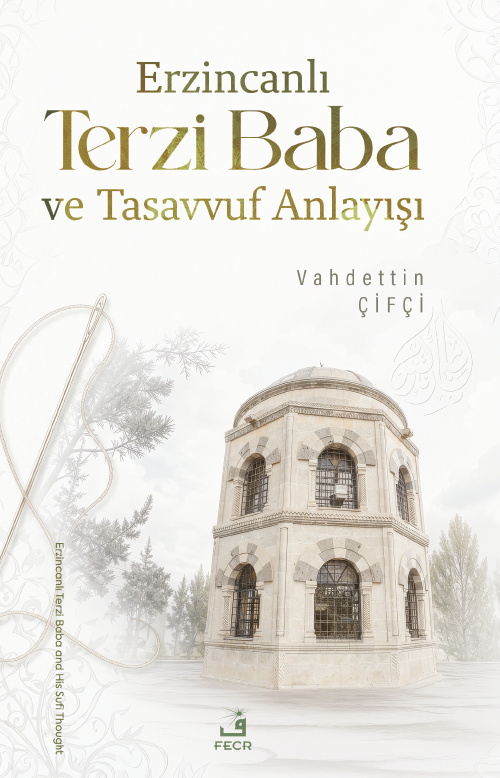
Erzincanlı Terzi Baba and His Sufi Thought
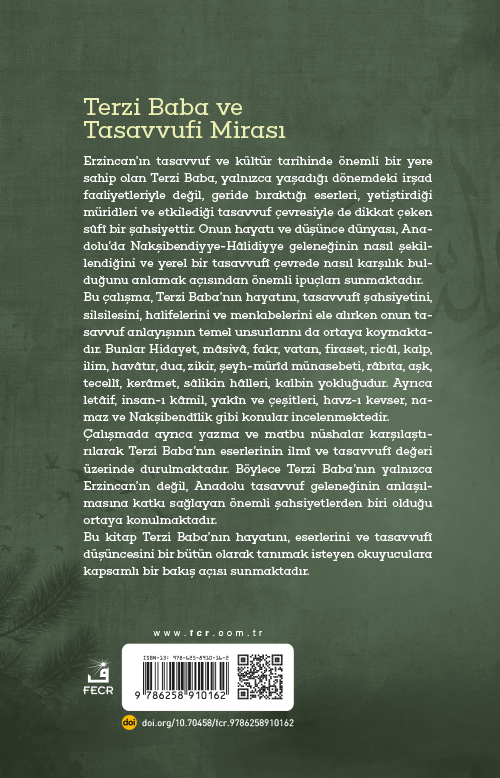
This study aims to examine the Sufi thought of Erzincanlı Terzi Baba,
one of the prominent representatives of the 19th-century Erzincan Sufi
tradition, and his position within the Naqshbandi-Khalidi order. The
primary source of this research is Terzi Baba’s work entitled Miftah al-
Kanz.
In the introduction, the religious and Sufi atmosphere of 19th-century
Erzincan is Evaluated in light of its historical context. The first chapter
analyzes Terzi Baba’s lineage, his claim to sayyid status, family structure,
Sufi training, tariqa silsila, and activities as a khalifa. The hagiographical
narratives attributed to him are evaluated through a critical
approach. In addition, his works Miftah al-Kanz and Sifat al-Subutiyya
are introduced.
The second chapter presents a comprehensive analysis of Terzi Baba’s
Sufi thought, centered on Miftah al-Kanz. Concepts of knowledge and
cognition such as guidance, faith, knowledge-ma’rifa, exoteric and
esoteric knowledge, the heart, and spiritual discernment; concepts of
spiritual wayfaring such as supplication, dhikr, rabita, the shaykh-disciple
relationship, tajalli, and karama; and concepts related to the ultimate
goal and the hereafter such as al-insan al-kamil, the levels of
yaqin, intercession, and prayer are evaluated within the framework of
classical Sufism and the Naqshbandi tradition.
In the conclusion, the fundamental dynamics of Terzi Baba’s Sufi system
are summarized, and his position within the Naqshbandi-Khalidi
path, as well as his contribution to the Sufi thought of the period, are
demonstrated. By identifying the Sufi understanding of a local figure
through his work, this study seeks to contribute to the Ottoman-Islamic
Sufi tradition.
Keywords: Terzi Baba; Sufism; Naqshbandiyya; Miftah al-Kanz; al-insan
al-kamil

 İÇ SAYFALAR