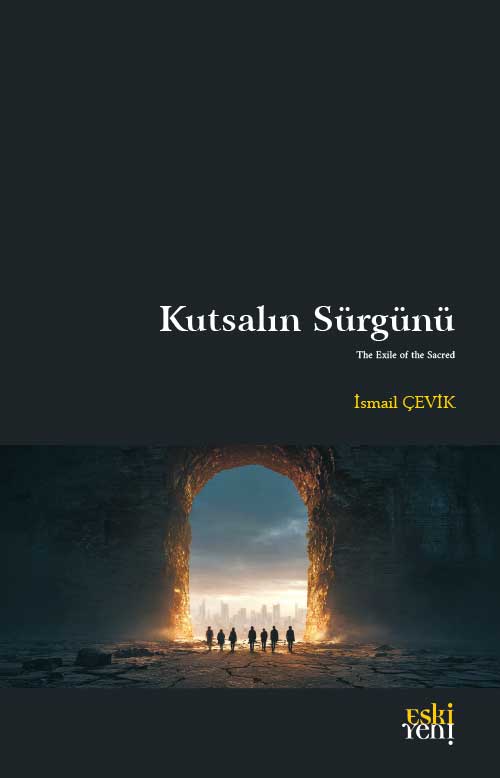
The Exile of the Sacred
The primary objective of early educational policies shaped by the Republican
revolutions was to establish absolute state control over religious and
educational mechanisms. The process, initiated by the abolition of the Caliphate
and the Unification of Education (Tevhid-i Tedrisat), served to control,
rationalize, and ultimately confine religion to the individual sphere.
Education became an effective apparatus for constructing the regime’s
desired generation of “free thought and free conscience.”
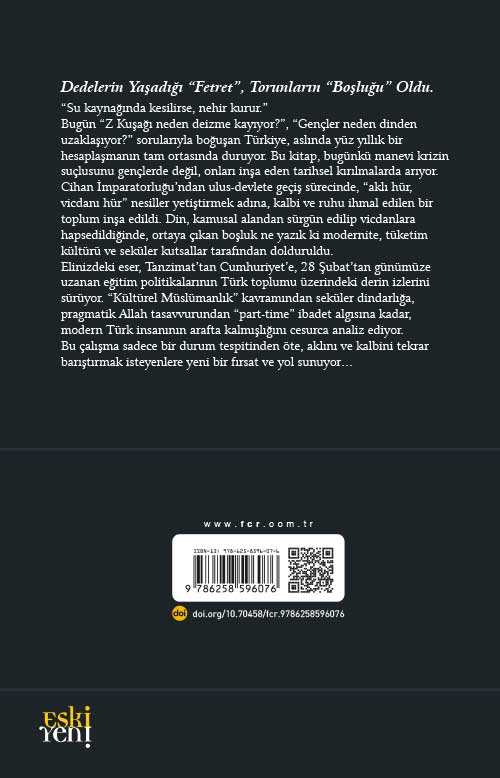
This study examines the structural impacts of the Turkish modernization
process—from the Tanzimat to the Republic—on religious education and
the social perception of piety. The core problem addressed is the contemporary
reflection of early Republican policies that isolated religion from
the public sphere. The “spiritual interregnum,” where religious education
was removed from curricula due to positivist and secular policies, damaged
traditional belief codes and reduced religious affiliation to a superficial
reflex (“Cultural Muslimhood”).
The central thesis posits that the deism, crisis of faith, and distant attitude
toward religion observed in Generation Z are not momentary rebellions.
Rather, they are the inevitable consequence of a historical rupture. Strict
secularization policies prevented previous generations from fully internalizing
and transmitting their spiritual heritage. A multi-generational lack of
religious literacy, the decline of the ulama’s authority, and the absolutization
of rational-secular reason have driven individuals toward theological
deviations and subjective belief systems.
Consequently, by analyzing the sociological costs of state efforts to rationalize
religious education, this book aims to overcome the crisis of “secular
piety” limited to formal rituals. Rather than merely critiquing the past, the
work lays the conceptual groundwork for an authentic religious education
model that can address the modern individual’s existential crises, reconcile
with civilizational roots, and accurately interpret the realities of the age.
Keywords: Religious Education, Turkish Modernization, Secularization,
Cultural Muslimhood, Generation Z, Secularism, Spiritual Interregnum




 İÇ SAYFALAR