0 Items - ₺0,00
- Sepette hiç bir ürün yok.

Orijinal fiyat: ₺400,00.₺280,00Şu andaki fiyat: ₺280,00.
 İÇ SAYFALAR
Qur’anic Stories-1
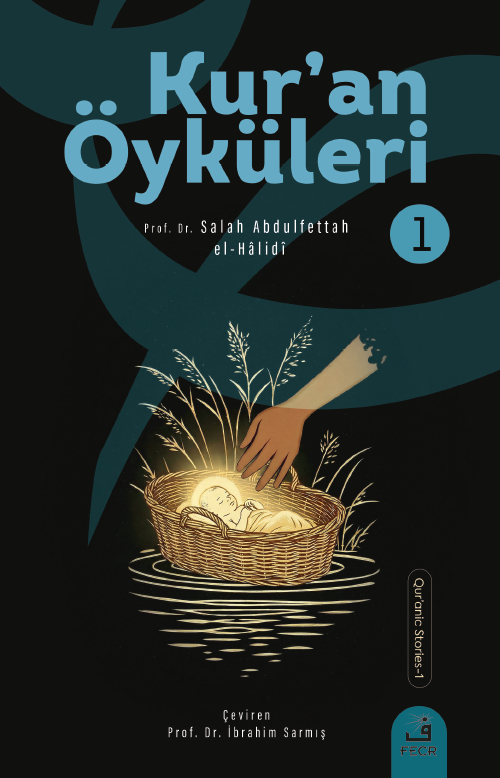
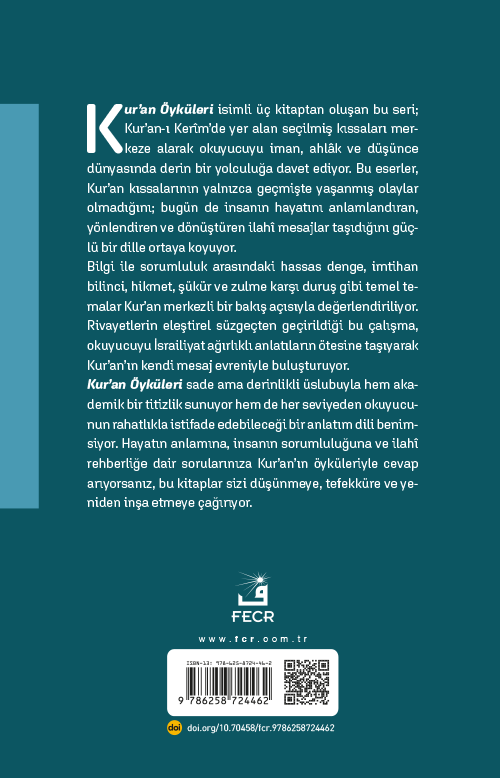
Qur’anic Stories 1 is a comprehensive study that examines the narratives of
the Qur’an not merely as historical accounts but as divine messages carrying
moral, social, and educational significance. The primary aim of the work is
to demonstrate that Qur’anic stories guide humanity toward sound belief,
ethical conduct, and reflective thinking. Focusing mainly on the stories of
the Children of Israel, the book analyzes how past communities’ experiences
convey universal lessons relevant to contemporary society.
The author argues that Qur’anic stories are neither mythical nor fictional
narratives; rather, they are grounded in historical truth and divine wisdom.
Instead of presenting events in strict chronological order, the Qur’an adopts
a message-centered narrative structure. The repetition and distribution of
stories across different chapters are interpreted as a deliberate pedagogical
method intended to deepen reflection and reinforce moral awareness.
Through exemplary figures such as Moses, Pharaoh, Korah, Saul, and Goliath,
the book explores fundamental contrasts including faith and disbelief,
justice and oppression, patience and rebellion. In addition, the stories of
the Companions of the Cave and Joseph are examined in relation to moral
resilience, divine assistance, and the concept of destiny. In this respect, the
work presents Qur’anic narratives as dynamic instruments of moral education
that contribute to both individual and social transformation.
The study employs an analytical and interpretive methodology grounded in
the Qur’anic text, avoiding excessive reliance on external legendary material.
By doing so, it emphasizes the Qur’an’s own explanatory framework and
its capacity to address human nature, social conflicts, and ethical responsibility
across time.
In conclusion, Qur’anic Stories 1 offers an original and accessible contribution
to Qur’anic studies by highlighting the enduring relevance of Qur’anic
narratives. It demonstrates that these stories are not confined to the past
but function as a continuous source of divine guidance shaping present and
future human experience.
Keywords: Qur’anic stories; Children of Israel; moral instruction; divine
guidance; Qur’anic interpretation
| Genel Yayın No | 1839 |
|---|---|
| Marka | Fecr |
| Marka No | 1089 |
| ISBN | 9786258724462 |
| Yayım Tarihi | 7.02.2026 |
| Dil | |
| Boyut | 13,5 x 21 cm |
| Baskı Sayısı | 1 |
| Sayfa Sayısı | 308 |
| Kağıt Cinsi | 70 gr. Enzo |
| Kapak | |
| Çevirmen | İbrahim Sarmış |