1000₺ ve üzeri alışverişlerde ÜCRETSİZ KARGO
Hafta içi saat 12.00‘ye kadar verilen siparişler AYNI GÜN KARGODA

  • 0 Items - 0,00
    • Sepette hiç bir ürün yok.
%30 İNDİRİM

Orijinal fiyat: ₺400,00.Şu andaki fiyat: ₺280,00.

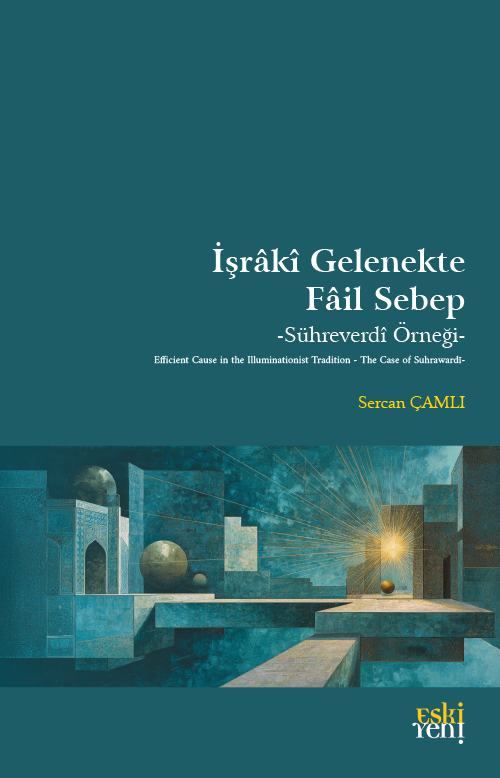
İşrâkî Gelenekte Fâil Sebep

Efficient Cause in the Illuminationist Tradition

10.70458/fcr.9786255536679

0000-0002-3466-6156 ES0354 ,
Paylaş
İşrâkî Gelenekte Fâil Sebep
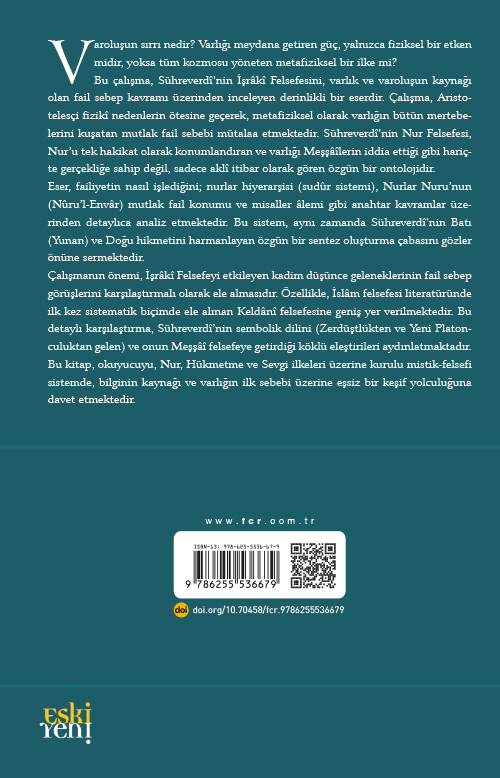
Bu çalışma, İşrâkî geleneğin kurucusu Sühreverdî’nin fail sebep kavramı üzerine düşüncelerini, Hikmetü’l-İşrâk eseri üzerinden incelemeyi amaçlamaktadır. Ancak odak noktası, dört fiziksel sebepten biri olan fail sebeple sınırlı olmayıp, daha ziyade varlığın bütün mertebelerini kuşatan ve var oluşu bütünüyle açıklayan fail sebebin metafiziksel boyutudur. Bu sebeple, Sühreverdî’nin İşrâkî ontolojisi ele alınmıştır. Gerekli düşünsel bağlamı oluşturmak ve Sühreverdî’yi daha iyi anlamak adına bu çalışma, önceki filozofların fail sebep üzerine düşüncelerini de ele almaktadır. Bu öncüller arasında Yunan filozoflarının felsefeleri ve Keldanî düşüncesi yer almaktadır. Ayrıca, Kindî, Fârâbî ve İbn Sînâ başta olmak üzere İslam filozoflarının fail sebebe ilişkin yaklaşımlarına yer verilmiştir. Bu önceki felsefi sistemlerin dahil edilmesi, Sühreverdî’nin özgün bakış açısını şekillendirdiği arka planı aydınlatmaktadır.
Çalışmanın temeli, İşrâkî sistemi tanımlayan Nûr (Işık) metafiziğine odaklanır. Nur basitçe görünür bir olgu değil, hakikat (hakîka, mâhiye) olarak kavranan yegâne gerçekliktir. Kendi kendini tezahür ettiren ve diğerlerini tezahür ettiren, dolayısıyla özünde fail güç olarak işlev gören şey olarak tanımlanır. Sühreverdî varlığı (vücûd) yalnızca kavramsal bir nitelik (el-İtibârü’l-aklî) olarak gören Meşşâî görüşü eleştirir. Nedensellik, sistemin tepesinden, mutlak fail neden olan Nûru’l-Envâr’dan (Nurlar Nuru) akar. Bu yayılma, farklılaşmanın mükemmellik (kemâl) derecelerine göre gerçekleştiği ve dinamik olarak karşılıklı hükmetme ve sevgi ilişkisi tarafından yönetilen bir nurlar hiyerarşisi aracılığıyla yapılandırılmıştır. Misaller âlemi gibi temel ontolojik bileşenler de aracı nedensel katmanlar olarak oynadıkları rol bakımından analiz edilmiştir. Ayrıca çalışmada Şehrezûrî’nin Şerhu Hikmeti’l-İşrâk eserinden
destekleyici yorumlar da aktarılmıştır.
Anahtar Kelimeler: Sühreverdî; İşrak Felsefesi; Fail sebep; Nur; Mahiyet; Hakikat; Misal âlemi; Keldanî felsefe

 İÇ SAYFALAR
This study aims to examine the thoughts of Suhrawardī the founder of the
Illuminationist (Ishrāqī) tradition through his work Ḥikmat al-Ishrāq (The
Philosophy of Illumination) on the concept of the efficient cause. However,
the focus is not limited to the efficient cause as one of the four physical
causes, but rather on the metaphysical dimension of the efficient cause
that explains existence in its entirety, encompassing all levels of being.
For this reason, Suhrawardī’s Illuminationist ontology has been reviewed.
To establish the necessary intellectual context and to better understand
Suhrawardī, this study also addresses the thoughts on the efficient cause
of earlier philosophers. These precursors include the philosophies of
Greek philosophers and Chaldean thought. Furthermore, the approaches
of Islamic philosophers, notably Kindî, Fârâbî, and Ibn Sīnâ, regarding the
efficient cause are included. The inclusion of these previous philosophical
systems illuminates the background against which Suhrawardī formulated
his unique perspective.
The core of study centers on the Light (Nūr) metaphysics, which defines
the Illuminationist system. Light is not simply a visible phenomenon, but
the sole reality, conceived as quiddity (haqiqa, māhiya). It is defined as
that which is self-manifest and makes others manifest, thereby inherently
functioning as the efficient power. Suhrawardī criticizes the Peripatetic
view by considering existence (wujūd) as merely a conceptual attribute
(al-Iʿtibār al-aqlī). Causality flows from the apex of the system, the Light of
Lights (Nūr al-Anwār), which is the absolute efficient cause. This emanation
is structured through a hierarchy of lights, where differentiation occurs
based on degrees of perfection (kamāl) and is dynamically governed
by the reciprocal relationship of domination and love. Key ontological
components, such as the World of Images, are also analyzed for their role
as intermediary causal layers. Additionally, the study includes supporting
comments from Şehrezûrî’s work Sharḥ Ḥikmat al-Ishrāq.
Keywords: Suhrawardī; Philosophy of Illumination; Efficient cause;
Light; Quiddity; Reality; World of images

Genel Yayın No

1744

Marka

Eskiyeni

Marka No

354

ISBN

9786255536679

Yayım Tarihi

17.12.2025

Dil

Boyut

13,5 x 21 cm

Baskı Sayısı

1

Sayfa Sayısı

347

Kağıt Cinsi

70 gr. Enzo

Kapak

Taksitleri Güncelle