1000₺ ve üzeri alışverişlerde ÜCRETSİZ KARGO
Hafta içi saat 12.00‘ye kadar verilen siparişler AYNI GÜN KARGODA

  • 0 Items - 0,00
    • Sepette hiç bir ürün yok.
%29 İNDİRİM

Orijinal fiyat: ₺175,00.Şu andaki fiyat: ₺125,00.

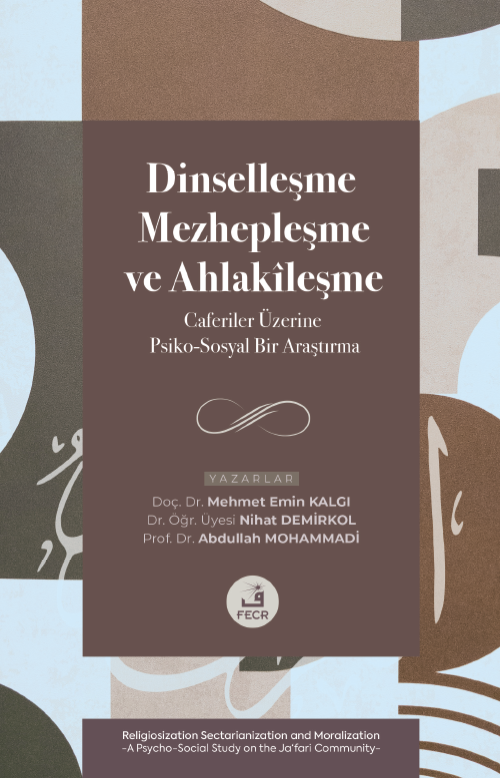
Dinselleşme, Mezhepleşme ve Ahlakîleşme

Religiosization, Sectarianization, and Moralization

10.70458/fcr.9786258724158

, , 0000-0001-6999-5059 0000-0001-5929-8161 0000-0002-5123-3643 F1060 ,
Paylaş
Dinselleşme, Mezhepleşme ve Ahlakîleşme
Bu çalışma, Caferi topluluğunun din algısını, mezhep kimliğini ve Sünnî mezhebe yönelik tutumlarını psiko-sosyal bir perspektiften incelemeyi amaçlamaktadır. Araştırmada dinselleşme, mezhepleşme ve ahlakîleşme süreçlerinin tarihsel, sosyolojik ve psikolojik temelleri ele alınmış;
özellikle Türkiye’de yaşayan Caferilerin dinî kimlik inşa biçimleri, bilinçaltı aktarımlar ve toplumsal etkileşimler bağlamında analiz edilmiştir.
Kavramsal çerçevede mezhep olgusunun tarihsel gelişimi, Sünnî ve Şiî geleneklerdeki farklı anlamlandırma biçimleri, Şia’nın ortaya çıkış süreci,
imamet doktrini ve Caferi fıkhının temel özellikleri değerlendirilmiştir. Çalışma, aynı zamanda mezhepler arası gerilimlerin epistemolojik
ve ontolojik temellerine de dikkat çekerek, bireylerin dinî aidiyet ve kimlik oluşturma süreçlerinde sosyo-psikolojik etkenlerin belirleyiciliğini
vurgulamaktadır. Araştırmada nitel yöntem kullanılmış; Caferi bireylerle yapılan yarı yapılandırılmış görüşmeler yoluyla veri toplanmıştır. Elde edilen bulgular, Caferilerin din algısının yoğun şekilde imamet doktrini etrafında şekillendiğini, mezhebi kimliklerinin tarihsel travmalar, kolektif hafıza
ve sembolik değerlerle güçlendiğini göstermektedir. Katılımcılar, Sünnî mezhebe yönelik değerlendirmelerinde genel olarak saygılı fakat mesafeli
bir tutum sergilemekte; kız alıp verme, sahabe algısı ve ibadet pratikleri gibi konularda belirgin farklılaşmalar ortaya çıkmaktadır. Çalışma, mezhebi kimliklerin yalnızca teolojik farklılıklardan ibaret olmadığını; bireyin psikolojik ihtiyaçları, toplumsal aidiyeti, tarihsel hafızası ve kültürel konumu tarafından şekillenen çok katmanlı yapılar olduğunu ortaya koymaktadır. Bu kapsamda araştırma, Türkiye’deki Caferi topluluğunu hem sosyolojik hem psikolojik boyutlarıyla ele alarak literatüre özgün bir katkı sunmaktadır.
Anahtar Kelimeler: Din Algısı; Mezhep Kimliği; Mezheplerarası İlişkiler; Ahlakileşme; Caferiler

 İÇ SAYFALAR
This study aims to examine the religious perception, sectarian identity,
and attitudes toward the Sunni tradition among the Ja‘fari community
from a psycho-social perspective. The research addresses the historical,
sociological, and psychological foundations of the processes of religiosization,
sectarianization, and moralization, and analyzes how Ja‘faris
living in Turkey construct their religious identities, including subconscious
transmissions and patterns of social interaction. Within the conceptual
framework, the historical development of the sectarian phenomenon,
the differing interpretive traditions of Sunni and Shi‘i thought,
the emergence of Shi‘ism, the doctrine of imamate, and the fundamental
characteristics of Ja‘fari jurisprudence are evaluated. The study also
highlights the epistemological and ontological roots of inter-sectarian
tensions, emphasizing the determining role of psycho-social factors in
individuals’ processes of religious affiliation and identity formation.
A qualitative methodology was employed, and data were collected through
semi-structured interviews conducted with Ja‘fari participants.
The findings reveal that the religious perceptions of Ja‘faris are strongly
shaped by the doctrine of imamate and that their sectarian identities
are reinforced by historical traumas, collective memory, and symbolic
values. Participants generally expressed respectful yet distant attitudes
toward the Sunni tradition, with notable differences observed in areas
such as intermarriage, perceptions of certain companions, and ritual
practices.
This study demonstrates that sectarian identities are not merely theological
distinctions but rather multifaceted structures shaped by individuals’
psychological needs, social belonging, historical memory, and cultural
context. In this regard, the research offers an original contribution
to the literature by examining the Ja‘fari community in Turkey through
both sociological and psychological dimensions.
Keywords: Religious Perception; Sectarian Identity; Inter-Sectarian Relations;
Moralization Ja‘faris

Genel Yayın No

1782

Marka

Fecr

Marka No

1060

ISBN

9786258724158

Yayım Tarihi

17.12.2025

Dil

Boyut

13,5 x 21 cm

Baskı Sayısı

1

Sayfa Sayısı

116

Kağıt Cinsi

70 gr. Enzo

Kapak

Taksitleri Güncelle