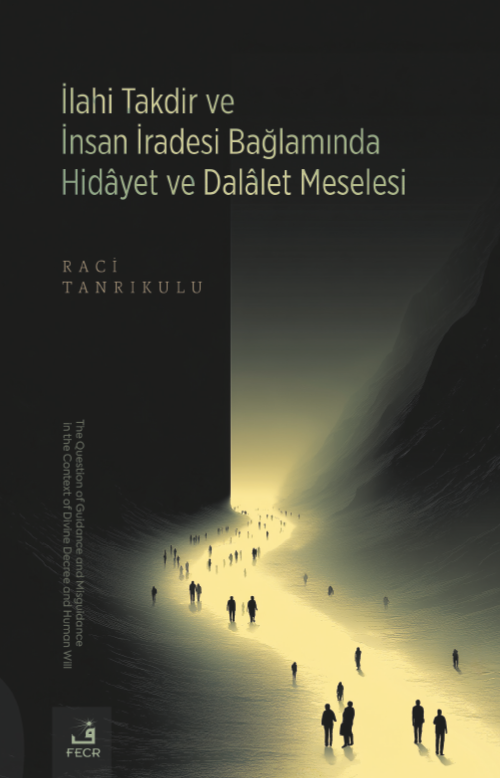
The Question of Guidance and Misguidance in the Context of
Divine Decree and Human Will
One of the key concepts concerning the relationship between God,
humanity, and the cosmos is hidāyah (divine guidance) and dalālah
(misguidance). Within the system of kalām (Islamic theology), these
concepts are discussed within the framework of the problem of qadar
(divine decree). In the issues of guidance and misguidance, the influence
of both God’s will and power, as well as human will, is evident.
The divine will and power are evaluated in the context of grace (luṭf)
and justice (ʿadl), while human will is considered in terms of moral
responsibility (taklīf). Therefore, attributing guidance and misguidance
entirely to God and thereby eliminating human responsibility is
not based on any rational (ʿaqlī) or scriptural (naqlī) justification. This
study examines the notions of hidāyah and dalālah according to al-
Ṭabarī, particularly in relation to the nature of human choices throughout
life and their influence on guidance and misguidance. The research,
structured around this framework, consists of an introduction, three
main chapters, and a conclusion. The introduction presents the research
methodology and provides a brief sociological account of al-Ṭabarī’s intellectual
persona. The first chapter analyzes the fundamental concepts
underlying hidāyah and dalālah. Within this context, the study discusses
the nature of fiṭrah (primordial human disposition) as the prototype
of human creation upon whom God bestowed both existence and moral
responsibility. It then explores the divine order governing the world
into which humans are born, identifying the conceptual boundaries of
guidance and misguidance within this framework, all through the lens
of al-Ṭabarī’s thought. The second chapter investigates the concept of
hidāyah according to kalām thought and al-Ṭabarī’s interpretation. It
discusses the divine invitation (daʿwah ilāhiyyah), human agency in
attaining guidance, the causes and conditions of guidance, and tawfīq—
understood as divine grace facilitating right guidance. The third
chapter focuses on dalālah, examining related concepts and conditions.
In this regard, it explores the notions of dalālah, khidhlān (divine abanvii
donment), and the “sealing” (khatm) of the human faculties. Finally,
the conclusion evaluates the main findings of the study in light of the
foregoing analyses.
Keywords: Kalām; Will; Guidance–Misguidance; Tawfīq–Khidlān; Responsibility;
Fiṭrah; Sunnatullāh; al-Ṭabarī

 İÇ SAYFALAR