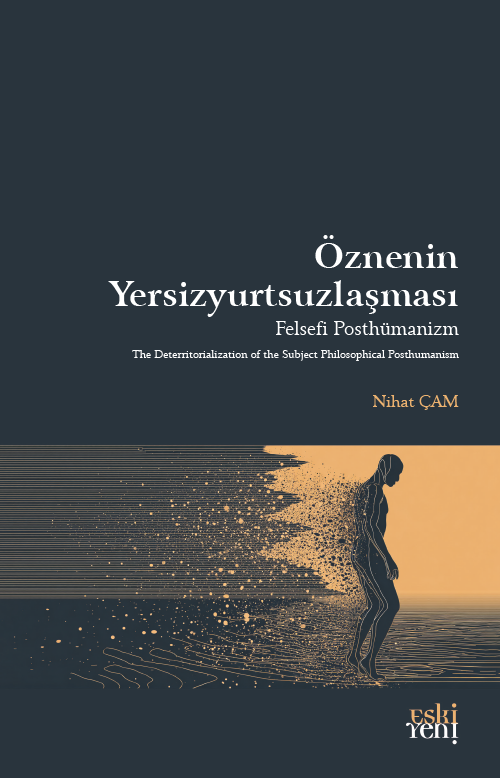
The Deterritorialization of the Subject
Philosophical Posthumanism
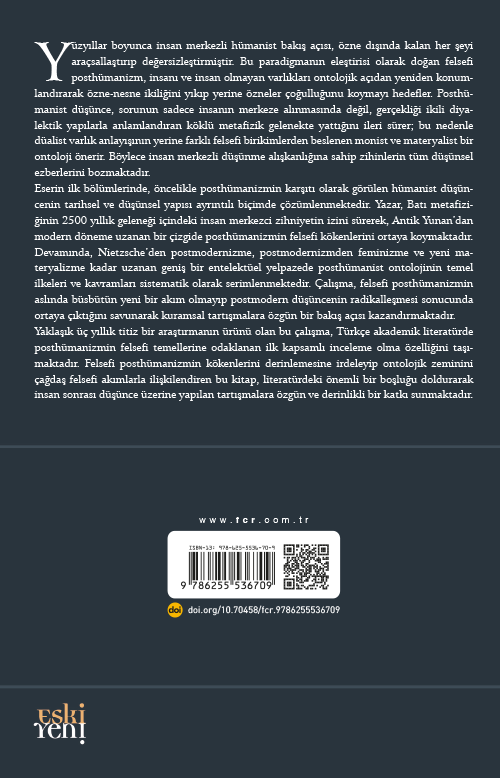
Throughout the history of philosophy, humans, in their attempt to understand
themselves and their surroundings, have shaped their modes
of thought according to the answers they provided to questions of ontology
and epistemology. Humanism, as an anthropocentric way of thinking,
has led to the instrumentalization and devaluation of everything
outside the subject. However, anthropocentric subjectivity has been
criticized not only for excluding non-human entities but also for marginalizing
certain types of humans. Emerging as a reaction to humanist
subjectivity, posthumanism seeks to reposition humans and other beings
ontologically. It aims to dismantle the subject-object dualism and
replace it with a plurality of subjects. Posthumanism sees the problem
not merely as centering the human but as understanding everything
within a dialectical framework. For this reason, it attempts to replace
the dualistic understanding of being with a monist and materialist ontology,
drawing on various philosophical traditions and disciplines. In
this study, first of all, humanism-the counterpart of posthumanism-is
discussed, followed by tracing the philosophical roots of posthumanism
and outlining the posthumanist ontology. In line with its aims, the
study argues that, that philosophical posthumanism emerges not as a
new movement but rather as a radicalization of postmodern thought.
Keywords: Humanism; Posthumanism; Postmodernism; Subject; Ontology;
Feminism; New Materialism

 İÇ SAYFALAR