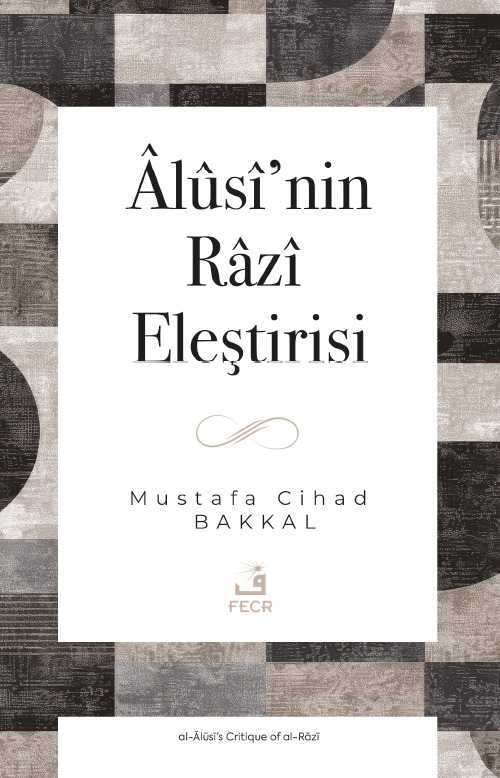
Al-Ālūsī’s Critique of al-Rāzī
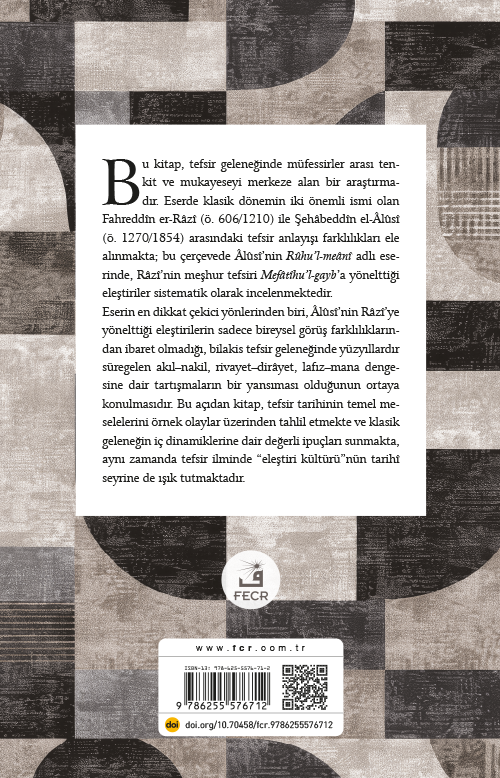
This book is a study that focuses on inter-exegetical critique and compa-
rison within the tafsīr tradition. The work addresses the exegetical
diffe-rences between two eminent figures of the classical period: Fakhr
al-Dīn al-Rāzī (d. 606/1210) and Shihāb al-Dīn al-Ālūsī (d. 1270/1854).
In particu-lar, it systematically examines the criticisms directed by alĀlūsī,
in his Rūḥ al-Maʿānī, against al-Rāzī’s renowned commentary
Mafātīḥ al-Ghayb.
The study begins by outlining the lives, scholarly profiles, and exegetical
methods of both scholars, before turning to al-Ālūsī’s criticisms of
al-Rāzī on methodological and substantive grounds. Among the topics
addressed are the tension between transmitted and rational exegesis
(riwāya and dirāya), the binding authority of ḥadīth and early reports,
differences between tafsīr and taʾwīl, sectarian affiliations, Qurʾānic
sciences, linguistic analyses, scientific exegesis, allegorical interpretation,
and theological commentary. In this way, the work demonstrates
how the distinct intellectual backgrounds and methodological preferences
of the two exegetes led to divergent interpretations of the same
verses.
One of the most significant contributions of this book is its demonstration
that al-Ālūsī’s critiques of al-Rāzī are not merely personal disagreements,
but rather a reflection of the longstanding debates within tafsīr
tradition over reason and revelation, transmission and independent reasoning,
form and meaning, and rhetoric and coherence. Thus, the work
not only highlights the intellectual exchange between two prominent
exegetes, but also sheds light on some of the most fundamental issues in
the history of Qurʾānic interpretation.
The book also illuminates the historical development of the “culture
of critique” in tafsīr studies. Beginning with the corrections made by
the Prophet himself regarding misunderstandings of the Qurʾān, and
continuing through the Companions, early exegetical schools, and later
scholars such as al-Ṭabarī (d. 310/923), al-Māturīdī (d. 333/944),
al-Zamakhsharī (d. 538/1144) and al-Rāzī, this tradition of critique
culminates in al-Ālūsī as a late representative of rigorous exegetical engagement.
By situating al-Ālūsī’s objections to al-Rāzī within this broader
trajectory, the book contributes to a deeper understanding of tafsīr as
both an interpretive and evaluative discipline.
In conclusion, al-Ālūsī’s Critique of al-Rāzī makes a valuable contribution
to both the comprehension of classical exegetical heritage and the
methodological foundations of contemporary Qurʾānic studies. Given
the scarcity of works that directly compare al-Rāzī and al-Ālūsī, this
study fills an important gap in the literature and offers fresh perspectives
for future research in the field.
Keywords: Fakhr al-Dīn al-Rāzī; Shihāb al-Dīn al-Ālūsī; Tafsīr Methodology;
Riwāya and Dirāya, Culture of Critique

 İÇ SAYFALAR