1000₺ ve üzeri alışverişlerde ÜCRETSİZ KARGO
Hafta içi saat 12.00‘ye kadar verilen siparişler AYNI GÜN KARGODA

  • 0 Items - 0,00
    • Sepette hiç bir ürün yok.
%30 İNDİRİM

Orijinal fiyat: ₺270,00.Şu andaki fiyat: ₺190,00.

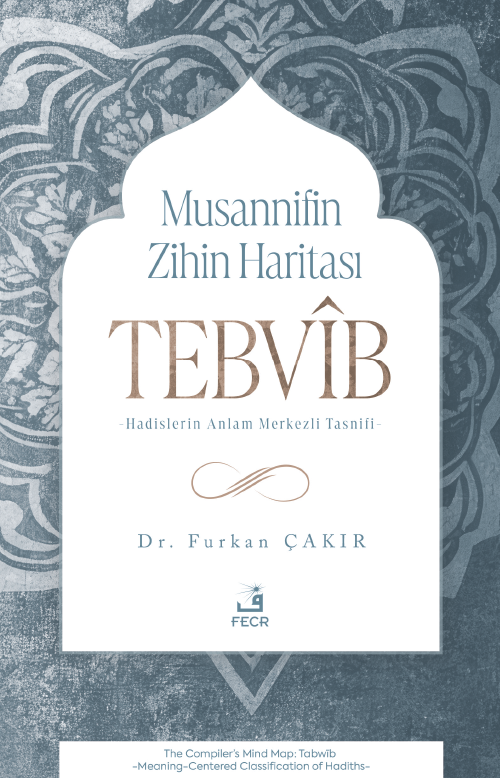
Musannifin Zihin Haritası Tebvîb

The Compiler’s Mind Map Tabwīb

10.70458/fcr.9786255576781

0000-0002-3269-1649 F1024 ,
Paylaş
Musannifin Zihin Haritası Tebvîb
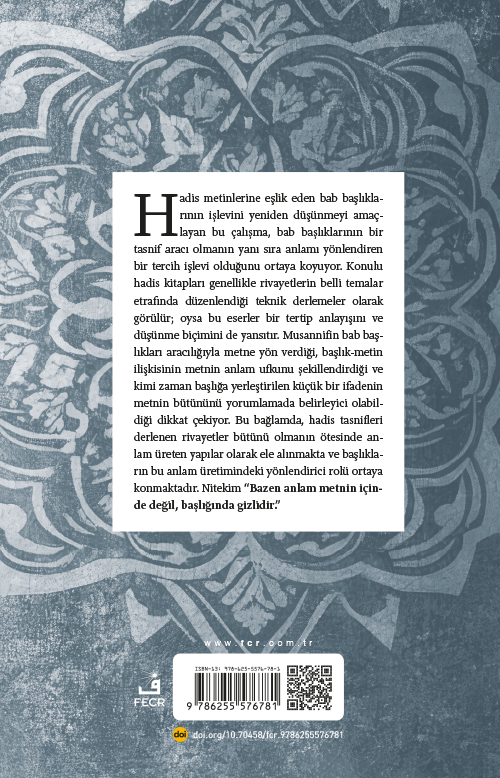
Hadis ilminin gelişim seyrinde ilk aşama olan tedvîn, rivayetlerin hafızalardan ve dağınık sahifelerden yazıya aktarılmasıyla bilgiyi muhafaza etme ihtiyacına cevap vermiştir. Bunu izleyen tasnîf dönemi ise, rivayetlerin konu esasına göre düzenlenmesi sonucunda kitâb, bab ve terceme gibi kavramları ilim geleneğinin merkezine yerleştirmiştir. Zehebî’nin isabetle belirttiği üzere, tasnif ve tedvîn gibi tebvîb de müstakil bir dönem olarak ele alınmalıdır. Bu bağlamda tebvîb, yalnızca biçimsel bir tasnif yöntemi olmanın ötesinde, musannifin ilmî yaklaşımını, yaşadığı dönemin düşünsel atmosferini ve metodolojik tercihlerini yansıtan bir zihinsel inşadır. Çalışma, hadislerin çağlar üstü mesajını muhafaza etme amacına bağlı olarak tebvîbin tecdîdi gereğini vurgulamaktadır. Nassların sınırlı, hadiselerin ise sınırsız olduğu ilkesinden hareketle, hadis geleneğinin anlam örgüsünün yalnızca metinlerden değil, bâb başlıklarının tarihsel bağlamından da beslendiği ileri sürülmektedir. Bu çerçevede, hadis literatürüne yönelik yeniden yapılandırma girişimlerinin, geleneğin sürekliliğini koruyacak ilmî titizlik ve kavramsal bütünlük içinde değerlendirilmesi gerektiği sonucuna varılmaktadır.
Anahtar Kelimeler: Hadis; Tebvîb; Tedvîn; Tasnîf; Tecdîd

 İÇ SAYFALAR
The Compiler’s Mind Map
Tabwīb
– Meaning-Centered Classification of Hadiths –
This study examines the phenomenon of tabwīb, which is associated
with the transformation of hadiths from being merely tools of transmission
into primary sources of meaning, legal judgment, and social
orientation throughout history. In the developmental trajectory of hadith
scholarship, the first stage, tadwīn, responded to the need for preserving
knowledge by recording narrations that had previously existed
in memory or scattered written notes. The subsequent taṣnīf period organized
these narrations thematically, placing concepts such as kitāb,
bāb, and tarjama at the center of the scholarly tradition. As al-Dhahabī
aptly pointed out, tabwīb, like taṣnīf and tadwīn, should be regarded as
an independent stage in the evolution of hadith literature. In this context,
tabwīb represents more than a formal method of classification; it
reflects the compiler’s intellectual perspective, the intellectual climate
of his time, and his methodological preferences. The study emphasizes
the necessity of renewing (tajdīd) tabwīb in order to preserve the timeless
message of the Prophet’s traditions. Based on the principle that
the texts (naṣṣ) are limited while events are infinite, it argues that the
semantic framework of the hadith tradition draws not only from textual
content but also from the historical context of bāb headings. Accordingly,
attempts to reconstruct the hadith corpus must be approached with
scholarly precision and conceptual integrity so as to preserve continuity
with the classical tradition.
Keywords: Hadith; Tabwīb; Tadwin; Tasnif; Tajdid

Genel Yayın No

1713

Marka

Fecr

Marka No

1024

ISBN

9786255576781

Yayım Tarihi

17.10.2025

Dil

Boyut

13,5 x 21 cm

Baskı Sayısı

1

Sayfa Sayısı

198

Kağıt Cinsi

70 gr. Enzo

Kapak

Taksitleri Güncelle