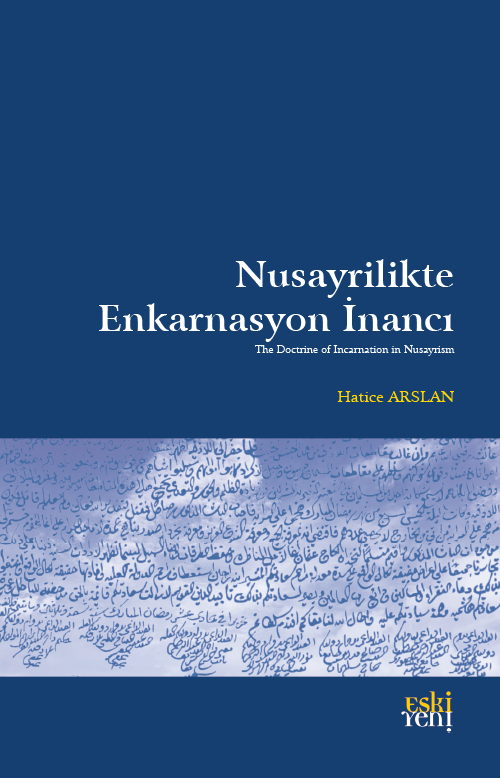
This study examines the belief in incarnation within the Nusayri tradition,
tracing its development from its earliest formulations to the modern
period. The analysis is structured around three key theological
stages.
The first stage focuses on the works of Muhammad b. Nusayr, regarded
as the founder of Nusayrism, and al-Hasibi, who systematized its doctrines.
These writings present the manifestation of God in two aspects –
maʿnā (meaning) and ism (name)- reflecting an early formulation of incarnation
belief.
The second stage corresponds to the 10th and 11th centuries, a period
of expansion and cultural interaction. During this time, new interpretations
of divine manifestation emerged. Although the dominant view
tends toward a docetic understanding, references to incarnation also appear
sporadically in Nusayri texts.
The third stage is based on the discovery of esoteric Nusayri texts by researchers
in the 19th century. These texts, likely composed in the 18th
and 19th centuries and heavily influenced by Christian thought, interpret
divine manifestation almost exclusively through a docetic lens. This
study also considers the perspectives of modern Nusayris on these texts
and the concept of incarnation.
Through historical and textual analysis, the study aims to contribute to a
deeper understanding of how the doctrine of incarnation, typically associated
with Christianity, was adapted within an Islamic esoteric framework.
Keywords: Nusayrism; Shia; Ghulat; İncarnation; Docetism

 İÇ SAYFALAR