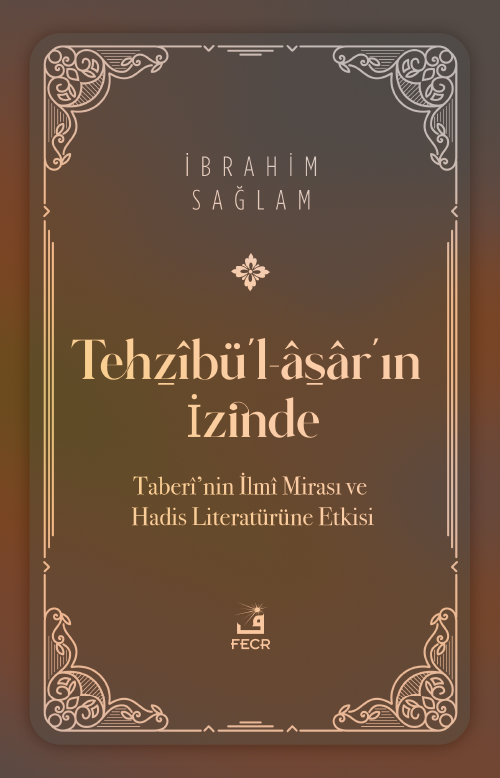
Abū Jaʿfar Muḥammad b. Jarīr al-Ṭabarī (d. 310/923) was a versatile scholar
of the Islamic tradition who authored works grounded in transmission. His
most comprehensive contribution in ḥadīth, Tahd̲h̲īb al-āthār, examines each
report in detail through both isnād and matn. He analyzed defects (ʿilal),
transmission routes, their relation to fiqh and Sunnah, recorded scholarly
disagreements with evidences, explained rare terms, critiqued innovators and
sought to reconcile seemingly contradictory narrations. This holistic method
gave the work significance in both transmission (riwāyah) and interpretation
(dirāyah). Upon its composition, it was described as a book “that leaves no
need for any other ḥadīth collection.” Ṭabarī arranged separate sections for the
musnads of al-ʿash̲ ̲ara al-mubash̲ ̲sh̲ ̲ara, Ahl al-Bayt, Banū Hāshim and the
mawālī. Yet the work remained unfinished and parts were lost. Even so, it
reached al-Andalus early and deeply influenced its commentary tradition.
Scholars such as Ibn Baṭṭāl (d. 439/1047), Ibn ʿAbd al-Barr (d. 463/1071) and
Qāḍī ʿIyāḍ (d. 544/1149) cited Ṭabarī, shaping Andalusian scholarship. The
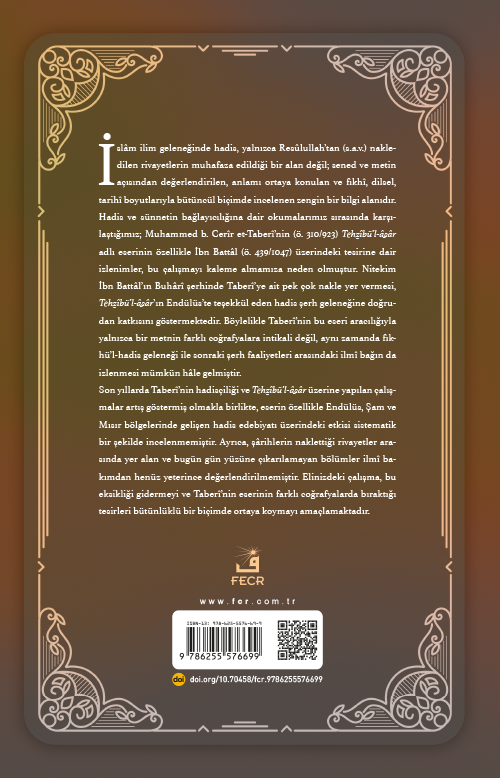
work later spread to Syria and Egypt, continuing its impact. Despite recent
studies on Ṭabarī’s ḥadīth scholarship, the influence of Tahd̲h̲īb al-āthār—
especially in al-Andalus, Syria and Egypt—has not been systematically
examined. Moreover, narrations preserved in commentaries but lost from the
original text remain unevaluated. This study seeks to address that gap.
Keywords: Ḥadīth, al-Ṭabarī, Tahd̲h̲īb al-āthār, Ḥadīth Literature, Fiqh al-
Ḥadīth

 İÇ SAYFALAR