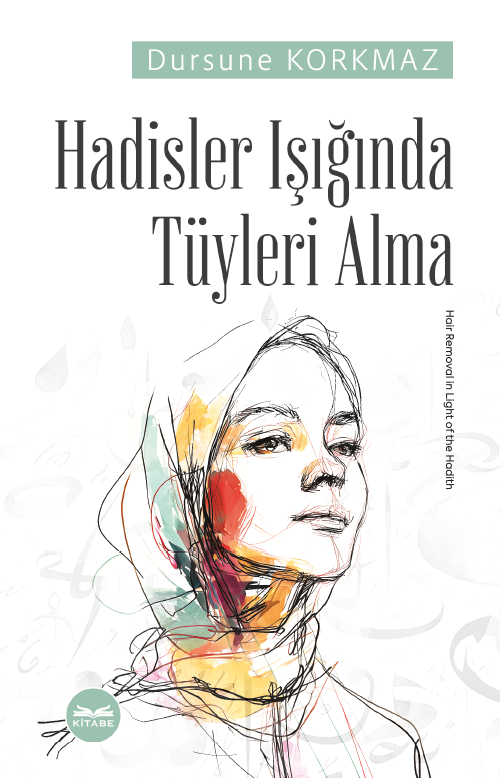
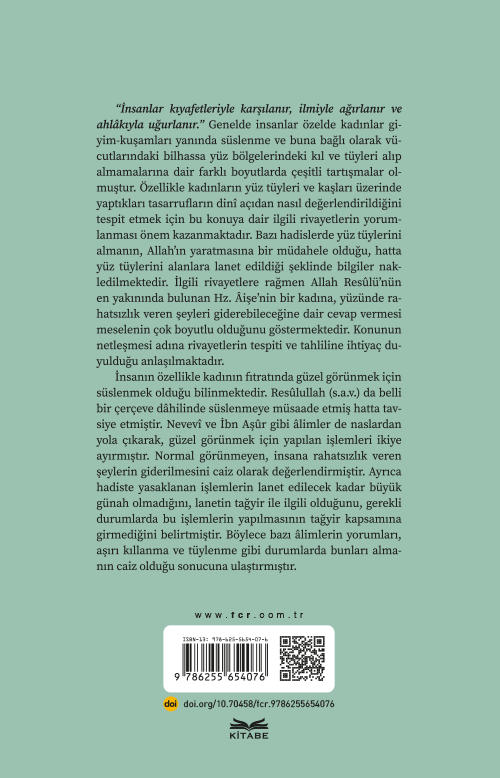
Throughout Islamic history, there have been various debates on various
levels regarding whether people should remove body hair, especially facial
hair, in addition to clothing and adornment. Interpreting relevant
narrations on this topic is crucial, particularly to understand how
women’s actions regarding facial hair and eyebrows are religiously
evaluated. Some hadiths convey that removing facial hair constitutes an
interference with God’s creation, even condemning those who remove it.
Despite these narrations, the fact that Aisha, one of the closest companions
to the Messenger of God, responded to a woman that she could remove
any discomfort on her face demonstrates the multifaceted nature
of the issue. Furthermore, it is noteworthy that Aisha was one of the
companions who narrated the narration prohibiting the removal of facial
hair. It is clear that the identification and analysis of these narrations
are necessary to clarify the issue.
In addition to the core hadith collection, the study also utilized sources
from other disciplines when necessary. A critical approach was employed
when necessary to better understand the subject. Following a
brief explanation of the chain of narrations’ chain of narration, information
was provided on their authenticity. Using textual criticism, the
relevant narrations were compared to the Quran, authentic Sunnah, reason,
and historical facts, and multidimensional assessments were utilized
to understand the Marwiyyat
Keywords: Hadith; Mütenemmisât; Plucking eyebrows; Hair; Feather

 İÇ SAYFALAR