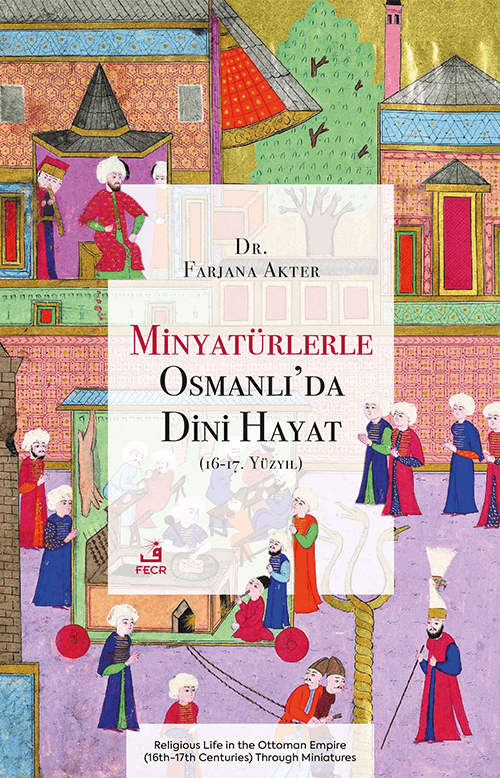
Religious Life in the Ottoman Empire (16th-17th Centuries) Through Miniatures
In the Ottoman Empire, religion was not limited to worship alone, but was seen as a comprehensive system that extended to many areas such as law, education and orderly life. This multifaceted system was clearly reflected in the visual arts of the period, especially in miniatures. Miniatures meticulously depicted mosques, Quranic schools, sermons, and the public’s acts of devotion. Illustrations of cleansing rituals, bathhouse culture, and hygiene practices reveal how Islamic principles of cleanliness were observed in Ottoman society. Education and moral values were also conveyed through miniatures. Scenes of schools with teachers and students highlighted the significance of religious education in the Ottoman world, while depictions of entertainment and daily life showcased the application of moral codes. Regarding law and justice, scenes illustrating the religious basis of Ottoman legal understanding, including qadi courts, executions, and punishments, are noteworthy. These miniatures demonstrate how religious rules shaped the Ottoman justice system. Furthermore, miniatures portrayed the religious and political rituals of Ottoman sultans, such as enthronement ceremonies, displays of the caliphate, religious processions, and the sultan’s interactions with religious sites. These scenes reflect the Ottoman administration’s efforts to reinforce its religious legitimacy. In the Ottoman State, religion was not just a personal matter of faith but a fundamental pillar of the state’s governing philosophy. Moreover, Ottoman miniatures serve as historical documents that illustrate not only the military aspects of warfare but also the establishment of order after conquests and the treatment of captives. These miniatures are significant artistic and historical resources that aid in understanding the Ottoman perspective on war and conquest, their attitude towards prisoners, and the state’s expansion process. This study aims to demonstrate that Ottoman miniatures were not merely artistic expressions but also powerful historical documents reflecting the religious life of the era. The images and scenes within these miniatures offer valuable insights into the Ottoman society’s relationship with religion and its pervasive influence from daily life to state governance.
Keywords: Ottoman Miniature; Religious Life; Belief and Worship, Daily Life, Warfare, Captive, Religious Rituals, Political Rituals, Art and Historical Document.


 İÇ SAYFALAR