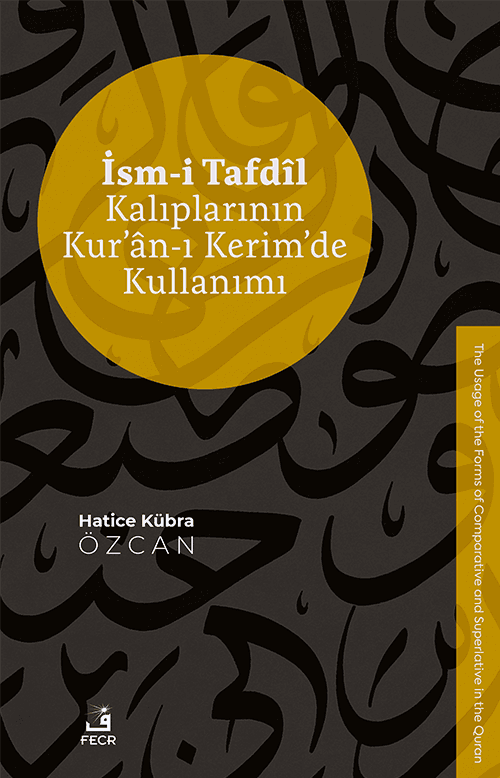
The Usage of the Forms of Comparative and Superlative in the Quran
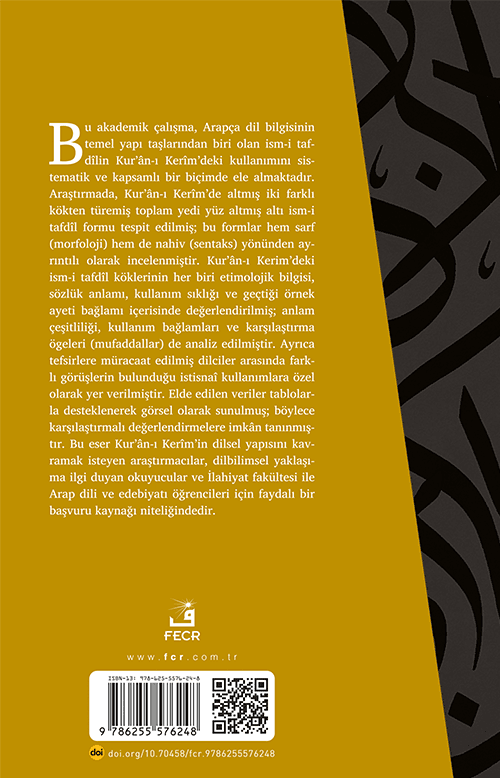
This study, consisting of an introduction, two main sections, and a conclusion, aims to identify the elative (ism al-tafdîl) forms found in the Qur’an -the primary source of Islam- and to determine their frequencies of use. The first section discusses the general characteristics of the elative, which is a subject of both morphology (ṣarf) and syntax (naḥw). In the second section, the study analyzes a total of 766 elative forms derived from 62 different roots identified in the Qur’an. Each root is examined individually in terms of its morphological structure, syntactic usage, and contextual variations, along with the frequency of occurrence. These elative forms are also exemplified through relevant Qur’anic verses. This research aims to determine how elative forms are used in the Qur’an. It seeks to answer questions such as: How many elative forms appear in the Qur’an? According to what criteria do these forms express superiority or preference? Which ones are used more frequently? Through these inquiries, the study investigates the function and significance of elative forms within divine revelation.
Keywords: Arabic Language and Rhetoric; Quran; Morphology; Comparative and Superlative, Frequency

 İÇ SAYFALAR