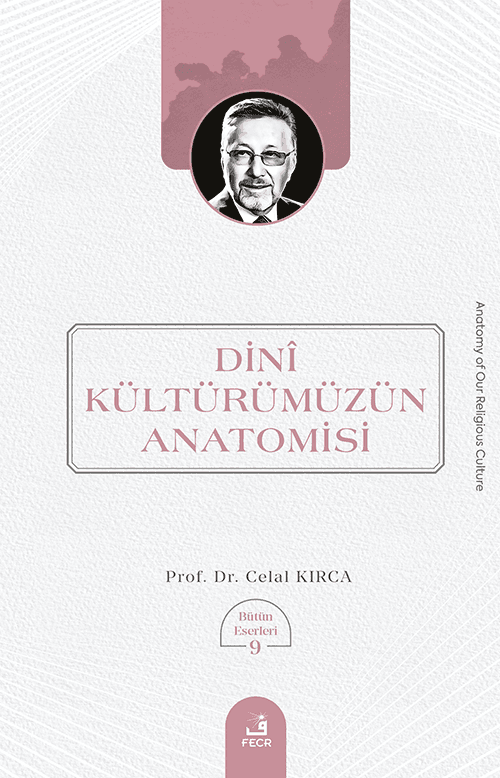
Anatomy of Our Religious Culture
One of the types of culture formed in the historical process and perhaps the most important one is our religious culture. Knowing, understanding, protecting and keeping this culture alive is of vital importance for a good future. However, while keeping this culture alive, an important problem is encountered. This is the unquestioning acceptance of the religious culture handed down from the past. Because this religious culture, which is reflected in life without being questioned and analysed, creates a basis for some negativities and intellectual problems in society. For this reason, it is necessary to question this culture and distinguish the right from the wrong; if this is not done, in the words of Jaroslav Pelikan, ‘tradition, which means the living spirit of the dead, turns into traditionalism, which means the dead spirit of the living’. Therefore, like every idea and every thought that is not questioned and criticised, religious thoughts and interpretations begin to be accepted as the absolute truth over time and can turn into traditionalism from an integralist point of view. As a result of this, in accordance with the rule of ‘every action creates a reaction’, traditionalism causes the birth of non-traditionalism; it also opens the door to currents of thought up to the total rejection of tradition. This leads the society to the mistake of constantly ‘seeing the empty side of the glass and not seeing the full side’ and reduces the effects of religion on society by turning it into a prejudiced society. In order to prevent this from happening, it is necessary to learn and question the inherited knowledge, to produce new thoughts and ideas in the light of changing conditions according to the time and place, and to create a vision of the future. Without creating a vision of the future and generating new ideas and thoughts for this purpose, merely transferring and interpreting the inherited knowledge cannot bring a solution to the current problems, especially the thought movements that are a threat to religion, such as agnosticism, deism and atheism, and the psychological factors such as hedonism, egoism and conformatism that feed them. This causes religion to lose its influence on society. Therefore, it is primarily the duty of scientists to think about these problems and find solutions. As a matter of fact, this book titled ‘Anatomy of our Religious Culture’ is a work created by bringing together the articles written and published for this purpose.
Keywords: Religion; Culture; Allah; Islam; Qur’an

 İÇ SAYFALAR