Zamakhshari’s Maqāmas (Advice to the Elders)
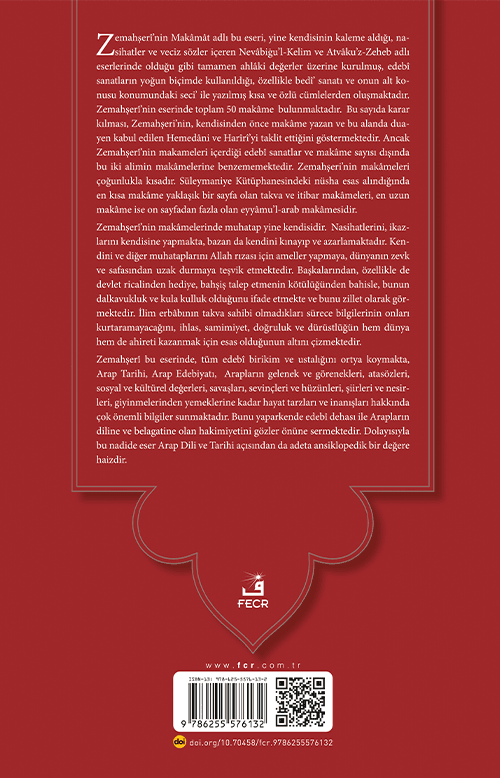
Zamakhsharī’s Maqāmāt, like his works Nawābiġu’l-Kelim and Atwāku’z-Zeheb, which contain advice and aphorisms, consists of short and concise sentences based entirely on moral values, using literary arts intensively, especially the art of bedī’ and its sub-subject, prose. Zamakhshari’s work contains 50 maqāma in total. The fact that he decided on this number shows that Zamakhshari imitated Hemedānī and al-Khārī, who wrote maqāma before him and who are considered to be doyen in this field. However, Zamakhshari’s maqāmas do not resemble the maqāmas of these two scholars except for the literary arts and the number of maqāmas. Zamakhshari’s maqāmas are mostly short. Based on the copy in Suleymaniye Library, the shortest maqāma is the maqāma of piety and reputation, which is about one page, and the longest maqāma is the maqāma of ayyām al-arab, which is more than ten pages. The addressee in Zamakhshari’s maqāmas is himself. He makes his advice and warnings to himself, and sometimes he condemns and reprimands himself. He encourages himself and his other interlocutors to do deeds for the sake of Allah and to stay away from the pleasures and pleasures of the world. He mentions the evil of demanding gifts and gratuities from others, especially from state officials, and states that this is sycophancy and servitude, and he considers this as humiliation. Zamakhshari emphasises that unless the people of knowledge have piety, their knowledge will not save them, and that ihlas, sincerity, truthfulness and honesty are essential for winning both this world and the hereafter. In this work, Zamakhshari reveals all his literary knowledge and mastery, and provides very important information about Arab history, Arabic literature, Arab customs and traditions, proverbs, social and cultural values, wars, joys and sorrows, poetry and prose, lifestyles and beliefs from dress to food. In doing so, he reveals his literary genius and his command of the Arabic language and eloquence. Therefore, this rare work has an encyclopaedic value in terms of Arabic Language and History.
Keywords: Zamakhshari; Arabic Literature; Maqamah; Rhetoric; Islamic Ethics.

 İÇ SAYFALAR