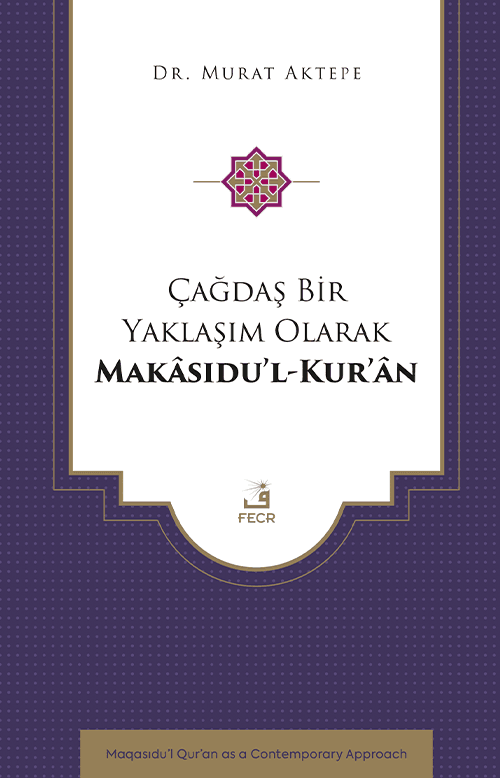
Maqasıdu’l Qur’an as a Contemporary Approach
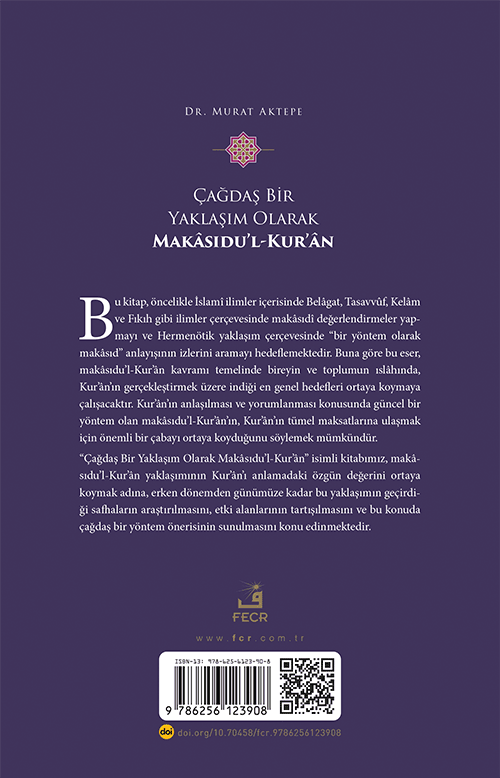
Since its revelation, the Qur’an has left enduring religious, political, historical, and social marks on humanity and continues to do so. The divine message has directly influenced human lives on both individual and societal levels, bringing about lasting transformations from the first audience of revelation in the VIIth century CE to the present day. For those who believe in it and apply it to their lives, the Qur’an represents a manifestation of the Creator’s infinite mercy. Efforts to understand the Qur’an have evolved from the early period to the present in line with human interests, abilities, and existing knowledge. This endeavor has been regarded as one of the most significant duties within the framework of the history of tafsir. The Qur’an, through its fundamental objectives, offers believers opportunities for renewal and encourages them to engage in deep reflection. Thus, believing in the Qur’an as a book should not remain merely a theological requirement. Instead, reading, understanding, identifying its objectives, grasping its essence and spirit, and reflecting it into life should be considered the primary goals. The concept of Maqasid al-Qur’an can be defined as a Qur’anic interpretive approach that seeks to identify the universal objectives within the Qur’an by examining its entirety through a teleological methodology. The terminology related to the principle of preserving religion, life, intellect, lineage, and property-recognized as the five universals and essential collective interests in Islamic legal Philosophy has played a pioneering role in shaping the concept of Maqasid al-Qur’an. Accordingly, this book endeavors to provide a comprehensive historical analysis of the Maqasid al-Qur’an perspective through an inductive method. It synthesizes the concept of Maqasid al-Qur’an, the scholarly contributions on the subject, the teleological interpretations of exegetes, and comparable approaches across history. The study includes a periodization of the Maqasid al-Qur’an approach, examining interpretations up to the 13th century AH and those continuing to the present day through a meta-analysis. Drawing on the notion that the knowledge of the future lies embedded in the past, the book identifies how the teleological approaches to the Qur’an of figures such as Ibn Jarir al-Tabari (d. 310/923), Abu Hamid al-Ghazali (d. 505/1111), Ibn Barrajan (d. 536/1142), al-Razi (d. 606/1210), Muhyiddin Ibn al-Arabi (d. 638/1240), Izz al-Din Ibn Abd al-Salam (d. 660/1262), Ibn Taymiyyah (d. 728/1328), Ibn Juzayy al-Kelbi (d. 741/1340), Ibn Qayyim al-Jawziyyah (d. 751/1350), and Imam al-Shatibi (d. 790/1388) have influenced modern interpretations. In the modern period, the purposeful approaches and teleological interpretations of Muhammad Abduh (d. 1905), Muhammad Rashid Rida (d. 1935), Muhammad Tahir Ibn Ashur (d. 1973), and Yusuf al-Qaradawi (d. 2022) have been analyzed alongside their universal categorizations. Moreover, the book attempts to address Maqasid al-Qur’an from a philosophical perspective, questioning universals ontologically and examining the extent to which time, place, and context influence understanding the Qur’an. A unique aspect of this book is its identification of key components related to the subject. The Maqasid al-Qur’an framework is explained through four fundamental components: al-Maqasid al-‘Ammah, Maqasid al-Ayat, Maqasid al-Suwar and Maqasid al-Qasas. The relationship between these components and the Maqasid al-Qur’an perspective has been analyzed comparatively. An examination of the accumulated knowledge on the objectives of the Qur’an reveals that the subject is fundamentally evaluated within the framework of the three general principles of Islam: Tawhid, Nubuwwah and the Afterlife. Findings on Maqasid al-Qur’an and the approaches of scholars in this regard demonstrate that the subject represents a manifestation of humanity’s efforts to understand the Qur’an. Thus, the Maqasid al-Qur’an perspective introduces a new teleological methodology to the science of tafsir. This method is expected to contribute significantly to the thematic tafsir studies, a contemporary research area in the field of Qur’anic exegesis. Reading, understanding, and applying the Qur’an in alignment with its objectives could serve as a remedy for the stagnation and feelings of backwardness, inspiring the Muslim Ummah to always strive for better from the past to the future.
Keywords: Quran, Tafsir, Maqasid, Meaning, Gâî interpretation, Verse, Surah, Guidance, Wisdom

 İÇ SAYFALAR