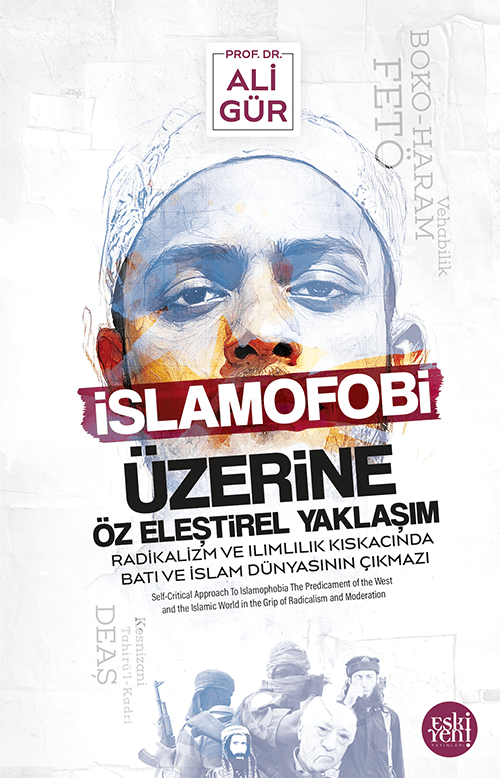
Self-Critical Approach To Islamophobia The Predicament of the West and the Islamic World in the Grip of Radicalism and Moderation
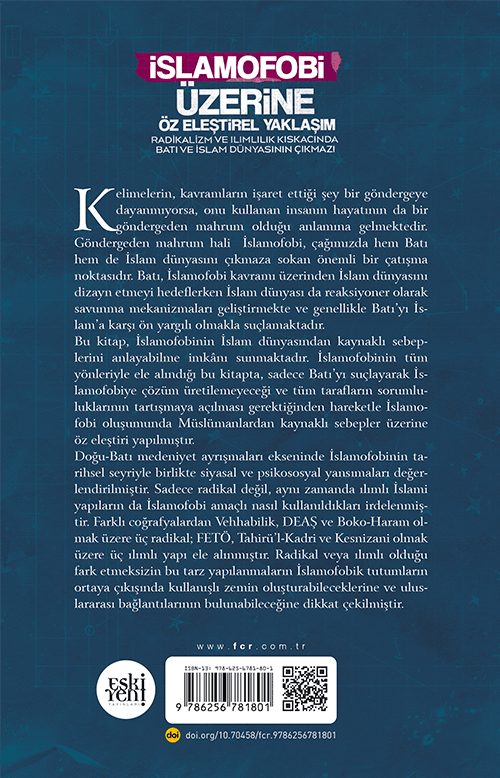
In this study, it is aimed to discuss the internal and external basic dynamics of Islamophobia from different perspectives, to reveal with examples how the West escalates Islamophobia with the radical structures it supports and how it aims to control Muslims with the imposition of moderate Islam, and to make Muslims self-criticize. In our recent era, the West has become dominant due to the East’s internal conflicts, corruption, drunkenness with power and missing the industrial revolution. The West, which gained power, imposed the philosophy that “the West is civilized, and the East is barbaric” in order to take revenge on the past. For fourteen centuries, what the West means by the East has always been Islam. On the one hand, they portray Muslims as pro-violence and terrorism with the radical Islamic structures they support, while on the other hand, they keep the Islamic world under control with the moderate Islamic structures they support in different geographies in order to protect their own imperial interests. The West uses all religion-based arguments, especially sectarian conflicts, to fuel Islamophobia. However, it is the Muslims themselves who give them this material and opportunity. In our study, three examples each from the many radical (Wahhabism, Islamic State of Iraq and Syria (DAESH), Boko Haram) and moderate structures (Fetullah Terrorist Organization (FETO), Tahir-ul Qadri, Kesnizani) that they support in different geographies of the Islamic World were examined in detail and their effects on the formation of Islamophobia were evaluated. It was discussed in detail how the Islamic world was atomized by fueling sectarian conflicts and sociocultural differences through these structures, how Muslims could be taken under control, regardless of whether they were radical or moderate, and how Muslims, who were constantly left in a defensive position, were rendered helpless. It was pointed out that the Islamic world, which constantly looks for the enemy outside, should question itself by self-criticism, that such structures, regardless of whether they are radical or moderate, may always have international connections and that we should always be on the alert against them.
Keywords: Boko Haram, Fetullah Terrorist Organization, ISIS, Moderate Islam, Islamophobia, Radical Islam, Kesnizani, Salafism, Tahir- ul Qadri, Wahhabism

 İÇ SAYFALAR