1000₺ ve üzeri alışverişlerde ÜCRETSİZ KARGO
Hafta içi saat 12.00‘ye kadar verilen siparişler AYNI GÜN KARGODA

  • 0 Items - 0,00
    • Sepette hiç bir ürün yok.
%29 İNDİRİM

Orijinal fiyat: ₺290,00.Şu andaki fiyat: ₺205,00.

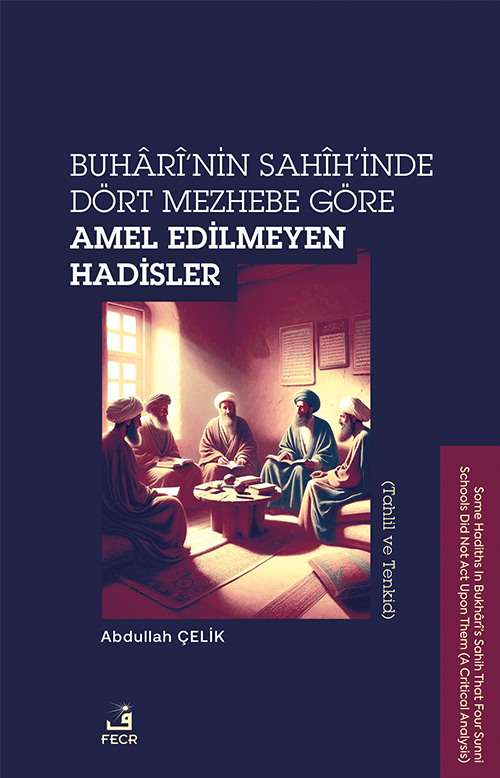
Buhârî’nin Sahîh’inde Dört Mezhebe Göre Amel Edilmeyen Hadisler (Tahlil ve Tenkid)

Some Hadiths İn Bukhârî’s Sahih That Four Sunni Schools Did Not Act Upon Them (A Critical Analysis)

10.70458/fcr.9786256123298

0000-0002-7812-5917 F0876 ,
Paylaş
Buhârî’nin Sahîh’inde Dört Mezhebe Göre Amel Edilmeyen Hadisler (Tahlil ve Tenkid)
Bu çalışma, İmam Buhârî’nin meşhur eseri el-Câmiu’s-Sahîh’te yer alan ve dört büyük İslâm mezhebi tarafından uygulanmayan hadislerin tahliline odaklanmaktadır. Çalışmada, Buhârî’nin hadisleri seçerken izlediği metodoloji ile mezheplerin hadis kabul etme kriterleri arasındaki farklar detaylı bir şekilde incelenmiştir. Buhârî’nin hadis ilmindeki konumu, dört mezhebin hadisleri değerlendirirken uyguladığı farklı yöntemler ve bu yöntemlerin fıkıh ilmine katkıları ele alınarak analiz edilmiştir. Buhârî, el Câmiu’s-Sahîh’te yer alan hadislerin Sahîhliğine büyük önem vermiştir. Hadislerin isnad zincirlerinin sağlamlığı onun için öncelikli bir kriter olmuştur. Ancak dört mezhebin fıkıh usûlü ve hadis kabul kriterleri, sadece isnad zincirine değil, hadis metinlerinin Kur’an’a, Sünnete ve İslâm’ın genel ilkelerine uygunluğunu da şart koşmuştur. Bu durum, mezheplerin Buhârî’nin eserinde yer alan bazı hadisleri neden kabul etmediğini açıklamaktadır. Mezhepler, metinlerdeki açık çelişkiler veya İslâm’ın genel ilkelerine aykırılık gördüklerinde bu hadislerle amel etmeyi reddetmişlerdir. Çalışmada, mezhepler tarafından kabul edilmeyen hadislerin detaylı analizine yer verilmiştir. Bazı hadislerin isnad açısından Sahîh olduğu, ancak metin açısından mezheplerin fıkıh usûlüyle örtüşmediği tespit edilmiştir. Mezhepler, bu hadislerin nesh edilmiş olabileceği ya da belirli bir bağlamda geçerli olduklarını öne sürerek bu rivayetlerle amel etmemişlerdir. Özellikle yirmi beş rivayet üzerinde durulmuş ve bunların farklı gerekçelerle mezhepler tarafından uygulanmadığı açıklanmıştır. Mezhep âlimleri, üç rivayeti mensuh, iki rivayeti ise illetli kabul etmişlerdir. Geriye kalan rivayetler ise Kur’an, icmâ ve râvi uygulamasına aykırılık gibi nedenlerle reddedilmiştir. Çalışmanın bulgularına göre, Buhârî’nin dört mezhebin içtihatlarından farklı bir metodoloji izlediği görülmektedir. Yirmi beş rivayetten dokuzuyla amel ederek dört mezhepten ayrılmış, geri kalan rivayetlerde ise cumhurla aynı görüşü paylaşmıştır. Buhârî’nin bu tutumu, eserini oluştururken sadece kendi görüşlerine değil, bazı âlimlerin de bu hadislerle amel etmelerini göz önünde bulundurduğunu göstermektedir. Ayrıca, bazı rivayetleri mensuh olarak değerlendirdiği düşüncesi de dile getirilmiştir. Sonuç olarak, Buhârî’nin el-Câmiu’s-Sahîh’teki hadisleri tasnif etme süreci, mezheplerin fıkıh usûlüyle her zaman birebir örtüşmemektedir. Buhârî’nin hadis ilmindeki otoritesi her ne kadar tartışılmaz olsa da mezheplerin içtihat süreçleri daha geniş bir metodolojik yaklaşıma sahiptir. Bu da sadece isnad sağlamlığına değil metnin anlamına ve İslâm’ın genel ilkelerine uygunluğa da önem verdiklerini göstermektedir. Çalışma, Buhârî’nin hadis metodolojisinin derinlemesine bir analizini sunarken mezheplerin hadis kabulündeki titizliğine de dikkat çekmektedir.
Anahtar Kelimeler: Buhârî; el-Câmiu’s-Sahîh; Fıkıh; Mezhep; Amel

 İÇ SAYFALAR
Some Hadiths In Bukhârî’s Sahih That Four Sunni Schools Did Not Act Upon Them (A Critical Analysis)
This study focuses on the analysis of the hadiths included in Imam al-Bukhârî’s renowned work, al-Jami’ al-Sahîh, which are not practiced by the four major Islamic schools of thought. It provides a detailed examination of the differences between Bukhârî’s methodology in selecting hadiths and the criteria the schools use for accepting them. The research analyzes Bukhârî’s standing in hadith studies, the distinct methods employed by the four schools in evaluating hadiths, and how these methods have contributed to the development of Islamic jurisprudence (fiqh). Bukhârî placed great emphasis on the authenticity of the hadiths included in al-Jami’ al-Sahîh, with the reliability of the chain of transmission (isnad) being a primary criterion. However, the four schools of thought have broader criteria for accepting hadiths, requiring not only a sound chain of transmission but also conformity of the hadiths’ content with the Qur’an, the Sunnah, and the overall principles of Islam. This explains why certain hadiths in Bukhârî’s collection were not accepted by these schools. When contradictions in the text or inconsistencies with Islamic principles were identified, the schools chose not to apply these hadiths in legal rulings. The study provides a detailed analysis of the hadiths that were not accepted by the schools. Some hadiths were found to be authentic in terms of their isnad, yet their content did not align with the principles of the schools’ legal theory (fiqh usul). The schools argued that these hadiths may have been abrogated (mansukh) or were context-specific, and thus refrained from applying them. Particular focus was given to twenty-five hadiths, which were explained as being rejected by the schools for various reasons. Of these, the scholars of the schools considered three hadiths to be abrogated and two to have defects (ilal). The remaining hadiths were rejected due to contradictions with the Qur’an, consensus (ijma), or the established practice of narrators. The findings of the study reveal that Bukhârî followed a methodology distinct from the legal reasoning of the four schools. By applying nine out of the twenty-five hadiths, Bukhârî diverged from the schools in those instances, while in the remaining cases, he shared the majority view. This suggests that while compiling his work, Bukhârî was not only following his own judgments but was also mindful of the fact that some scholars acted upon these hadiths. Additionally, it is argued that Bukhârî may have considered certain hadiths to be abrogated. In conclusion, Bukhârî’s process of categorizing hadiths in al- Jami’ al-Sahîh does not always align perfectly with the legal theory of the schools. Although Bukhârî’s authority in hadith studies is undisputed, the schools’ processes of legal reasoning encompass a broader methodological approach. This approach highlights not only the soundness of the isnad but also the meaning of the text and its consistency with the general principles of Islam. The study offers an in-depth analysis of Bukhârî’s hadith methodology while drawing attention to the meticulousness of the schools in accepting hadiths.
Keywords: Bukhârî; al-Jami’ al-Sahîh; Fiqh; Madhhab; Practice
Genel Yayın No

1423

Marka

Fecr

Marka No

876

ISBN

9786256123298

Yayım Tarihi

26.10.2024

Dil

Boyut

13,5 x 21 cm

Baskı Sayısı

1

Sayfa Sayısı

222

Kağıt Cinsi

70 gr. Enzo

Kapak

Taksitleri Güncelle