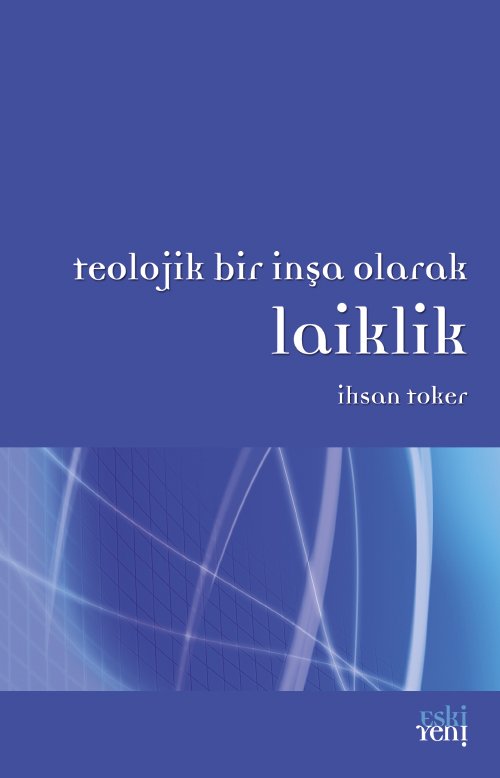
Secularism as a Theological Construct
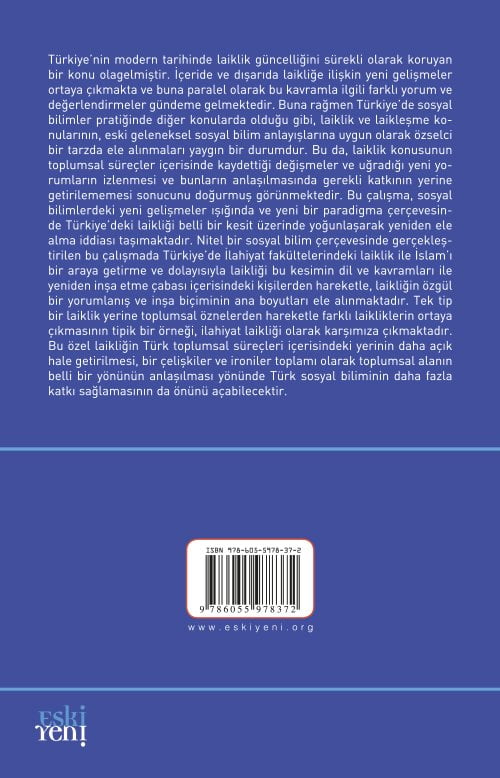
Secularism has been a constantly relevant topic in Türkiye's modern history. New developments regarding secularism are emerging both domestically and internationally, and in parallel, different interpretations and evaluations of this concept are emerging. Despite this, it is common in social science practice in Türkiye, as in other subjects, for secularism and secularization to be addressed in an essentialist manner, in accordance with outdated traditional social science understandings. This has resulted in a failure to make the necessary contribution to monitoring and understanding the changes and new interpretations of secularism within social processes. This study aims to reexamine secularism in Türkiye, focusing on a specific segment, in light of new developments in the social sciences and within the framework of a new paradigm. This study, conducted within a qualitative social science framework, examines the main dimensions of a specific interpretation and construction of secularism, drawing on individuals in theology faculties in Türkiye who are striving to bring secularism and Islam together, thereby reconstructing secularism using the language and concepts of this segment. Theological secularism is a typical example of the emergence of diverse secularisms based on social agents, rather than a single type of secularism. Clarifying the place of this particular secularism within Turkish social processes could pave the way for Turkish social science to further contribute to understanding a particular aspect of the social sphere as a collection of contradictions and ironies.