₺325,00 Original price: ₺325,00.₺225,00Current price: ₺225,00.
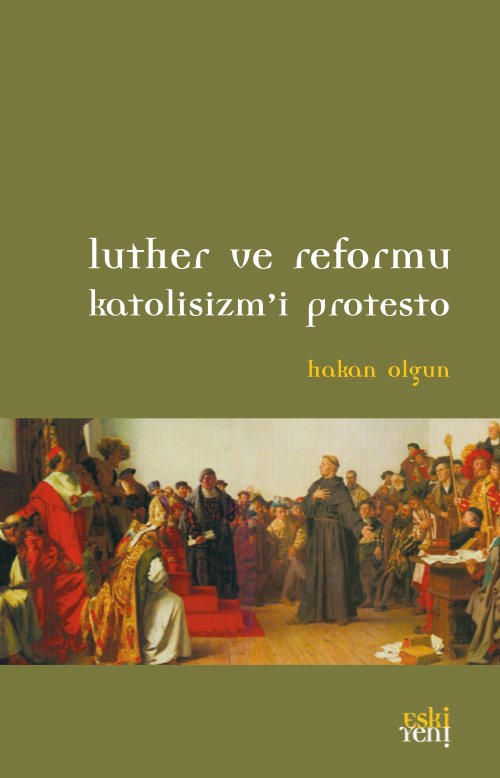
Luther and the Reformation Protest Catholicism
Luther and the Reformation Protest Catholicism
For Western Christian society, the Middle Ages represented a period besieged by the spiritual hegemony of the Roman Catholic Church. The papacy and the church, even doubting which was considered a sin and a crime, dominated both the souls and the purses of their flock for centuries through religious conspiracies. Many dissenters who opposed this exploitation were eliminated by the church's wrath, which also destroyed "heretics." The person who dared to threaten this sacred system of exploitation in the 16th century was Martin Luther. As a member of the clergy himself, Luther initially intended to remain within the church and reform it. However, when he was accused of heresy, he cut ties with the church and initiated a new Christian movement. With the support of political administrators who suffered from the Roman Church's financial exploitation, Luther quickly succeeded in shaking the very foundations of the Roman Church's dominance. Luther's Reformation teachings, which over time became institutionalized under the name "Protestantism," intended to eliminate the problem of Catholicism, this time gave rise to the problem of "Protestantization." Furthermore, the Christian Reformation, as a Western religious experience, profoundly influenced the political and ideological perceptions of our country.
States are the supreme institutions of the political order that unite societies. Any action related to the direction and administration of this institution constitutes the political structure. Any act that violates the essence of this structure or threatens its functioning is a political crime. Considering the balance between crime and punishment, many political regimes, until recent history, have imposed harsher penalties on perpetrators of these crimes than on those committed for other crimes.
Islamic law, which established even the law of war on the principle of mercy, considered all kinds of intellectual structures against political authority as a richness of thought from its earliest years, as long as they did not aim to destroy the state. In those times when the strong were considered right, it even granted certain rights to political criminals by distinguishing between ordinary and political crimes.
Despite the political fluctuations experienced in Islamic history, the principles laid down by divine authority in state administration have served as a guide that instills ideals in political administrations based on justice, not oppression.