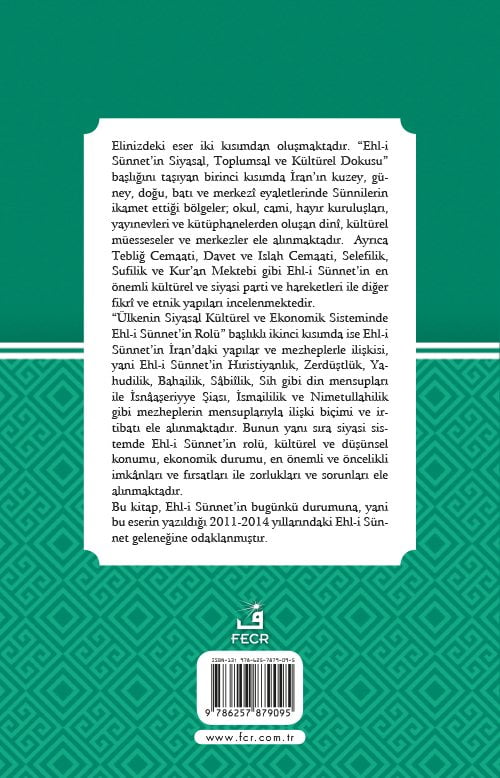
This work consists of two parts. The first, titled "The Political, Social, and Cultural Fabric of the Sunni Movement," examines the regions where Sunnis reside in the northern, southern, eastern, western, and central provinces of Iran, along with their religious and cultural institutions and centers, including schools, mosques, charitable organizations, publishing houses, and libraries. It also examines the most important cultural and political parties and movements of the Sunni movement, such as the Tablighi Jamaat, the Dawat and Islah Jamaat, Salafism, Sufism, and the Quran School, as well as their other intellectual and ethnic structures.
The second section, "The Role of the Sunnites in the Country's Political, Cultural, and Economic System," examines the Sunnites' relationship with structures and sects in Iran, namely, their relationships and contacts with members of religions such as Christianity, Zoroastrianism, Judaism, Baha'i, Sabaeanism, and Sikhism, as well as with members of sects such as Twelver Shia, Ismailism, and Nimatullahism. Furthermore, the Sunnites' role in the political system, their cultural and intellectual position, their economic situation, their most important and prioritized opportunities, challenges, and problems are discussed.
This book focuses on the current state of Ahl al-Sunnah, that is, the Ahl al-Sunnah tradition between 2011 and 2014, when this work was written.