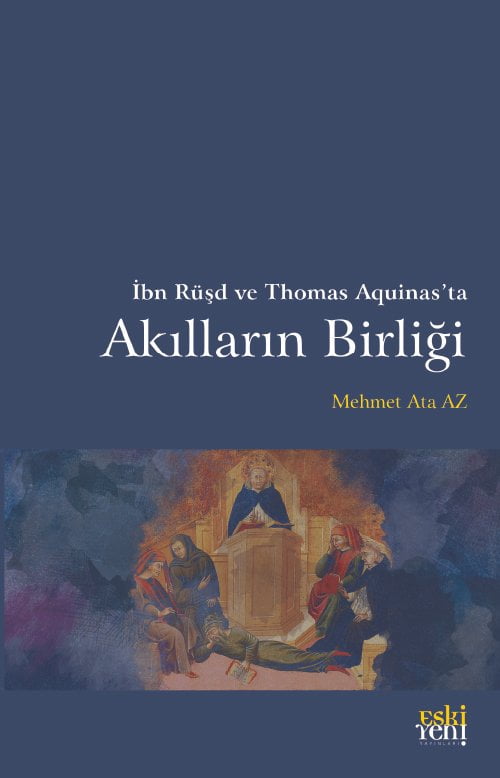
The Unity of Minds in Ibn Rushd and Thomas Aquinas
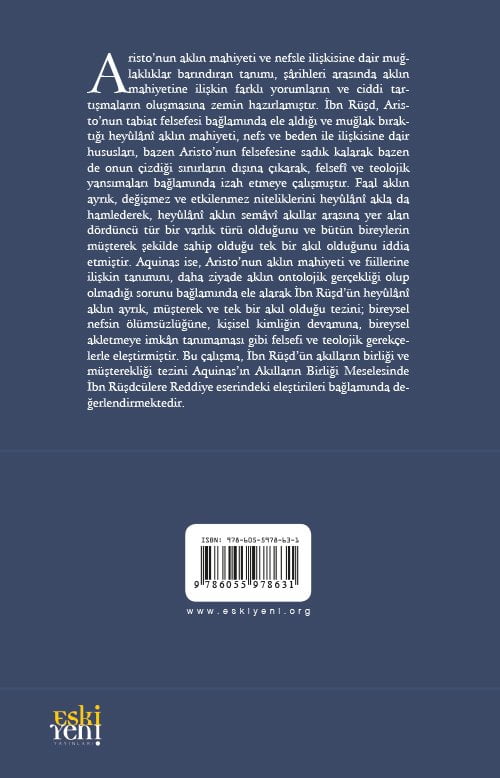
Aristotle's ambiguous definition of the nature of the intellect and its relationship to the soul paved the way for differing interpretations and serious debates among his commentators regarding the nature of the intellect. Ibn Rushd attempted to explain the issues concerning the nature of the spectral intellect and its relationship to the soul and body, which Aristotle addressed and left vague within the context of natural philosophy, within the context of his philosophical and theological reflections, sometimes remaining faithful to Aristotle's philosophy and sometimes straying beyond the boundaries he established. He attributed the distinct, immutable, and unaffected qualities of the active intellect to the spectral intellect, arguing that the spectral intellect is a fourth type of entity among the celestial intellects, a single intellect shared by all individuals. Aquinas, on the other hand, addressed Aristotle's definition of the nature and actions of intellect, particularly in the context of the question of whether intellect possesses ontological reality. He criticized Ibn Rushd's thesis that the imaginary intellect is a distinct, shared, and single intellect on philosophical and theological grounds, such as its denial of the immortality of the individual soul, the continuity of personal identity, and individual reasoning. This study evaluates Ibn Rushd's thesis of the unity and commonality of intellects within the context of Aquinas's criticisms in his work "Refutation of Averroists on the Question of the Unity of Intellects."

 INSIDE PAGES