1000₺ and above purchases FREE SHIPPING
weekday hours 12.00Orders placed up to SAME DAY CARGO

  • 0 Items - ₺0,00
    • There are no items in the cart.
NEW

₺0,00

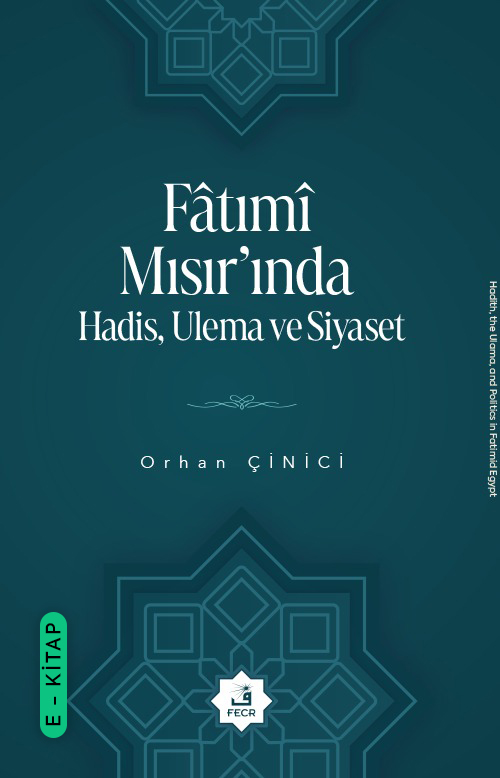
Hadith, Scholars, and Politics in Fatimid Egypt

Hadith, the Ulama, and Politics in Fatimid Egypt

10.70458/fcr.9786258910469

Out of stock

0000-0003-0698-3901 F1188 , ,
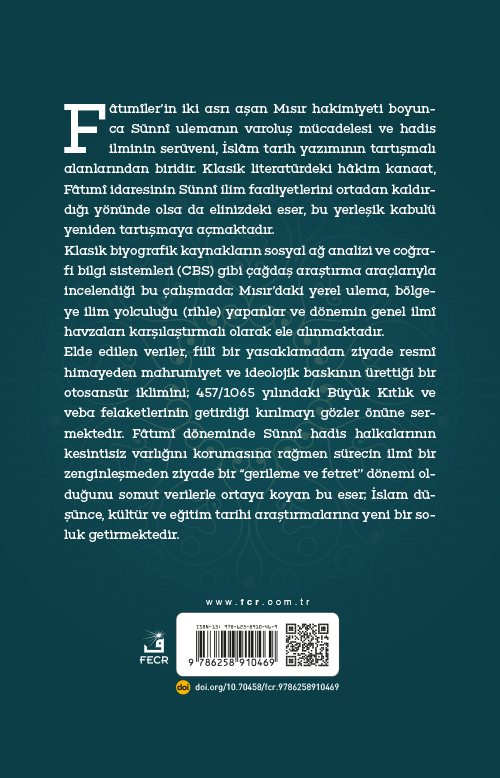
This study examines the state of the Sunni hadith tradition in Egypt during the Shiite-Ismaili Fatimid rule, the scholarly activities of the ulema, and their relationship with political authority in a multifaceted way. The research re-examines both the classical approach, which argues that the Fatimid administration eradicated Sunni hadith activities, and the modern view, which considers the period relatively tolerant, in light of biographical and quantitative data. The study analyzes ulema data compiled from classical historical and biographical sources through social network analysis, geographic information systems, statistical modeling, and the developed "Ulema Population Census Model." The scholarly profiles of Egyptian ulema, teacher-student relationships, hadith circles, journeys, centers of learning, authorship activities, and the relationship between rulers and ulema are evaluated within a holistic framework. The findings reveal that Sunni hadith teaching did not cease during the Fatimid period, and that study circles in mosques and homes generally continued. However, limited state support and sectarian-political pressures created an environment of indirect self-censorship, especially on sensitive issues. Furthermore, the Great Famine, epidemics, and migration movements had a decisive impact on academic life.
This has been taken into consideration. Consequently, the period is evaluated not as a process in which the science of hadith completely disappeared, but rather as a phase in which scholarly continuity was preserved, although a significant "decline and period of stagnation" occurred.
Keywords: Hadith; Ulema; Egypt; Fatimid Period; Relations between Rulers and Ulema; Digital Humanities; Data Analysis


This book is available as an ebook. A PDF version of the book is provided below; please click to access it.

PDF file of the book
Hadith, the Ulama, and Politics in Fatimid Egypt
This study examines the condition of the Sunni hadith tradition, the scholarly activities
of the ulama, and their relations with political authority in Egypt under Shiʿi-Ismaʿili
Fatimid rule. It reassesses, through biographical and quantitative evidence, both the
classical view that Fatimid rule eliminated Sunni scholarly activity and modern
interpretations that characterize the period as relatively tolerant. biographical data
collected from classical historical and biographical sources are analyzed through social
network analysis, geographic information systems, statistical modeling, and a special
developed “Ulama Population Census Model.” The study evaluates the scholarly profiles
of Egyptian ulama, teacher-student networks, hadith circles, scholarly journeys (rihla),
intellectual centres, authorship activities, and ruler-ulama relations within an integrated
analytical framework. The findings indicate that Sunni hadith transmission continued
without complete interruption under the Fatimids and that teaching circles, particularly
in mosques and private residences generally remained active. Nevertheless, the absence
of sustained official patronage and sectarian-political pressures created an environment
of indirect self-censorship, especially regarding sensitive issues. The study also
emphasizes the impact of the Great Famine, epidemics, migration, and broader
Demographic crises on scholarly life. It concludes that the Fatimid period should not be
characterized as one in which Sunni hadith scholarship disappeared entirely, but rather
as a phase in which scholarly continuity persisted alongside a marked period of decline
and interruption.
Keywords: Hadith; Scholars (ʿUlamāʾ); Egypt; Fatimid Period; Relations Between Rules
and Scholars; Digital Humanities; Data Analysis
General Publication Number

2042

Brand

Fecr

Brand Number

1188

ISBNs

9786258910469

Publication Date

15.10.2026

Log out

Page Number

298

Update Installments